Huawei Unveils "Tao's Law" for Semiconductor Innovation
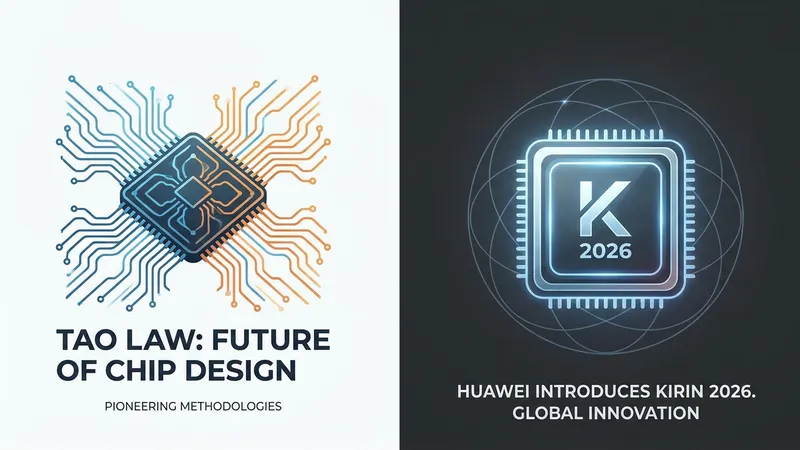
At the 2026 International Symposium on Circuits and Systems in Shanghai, Teresa He, Board Member and President of Huawei's Semiconductor Business Department, officially introduced "Tao’s (τ) Law." This marks the first time China has proposed an original guiding principle for the global semiconductor industry. Leveraging this law, Huawei has successfully designed and mass-produced 381 chips over the past six years. Notably, the upcoming Kirin 2026 chip, expected to debut on the Huawei Mate 90 this autumn, will fully adopt the innovative "logical folding" technology.
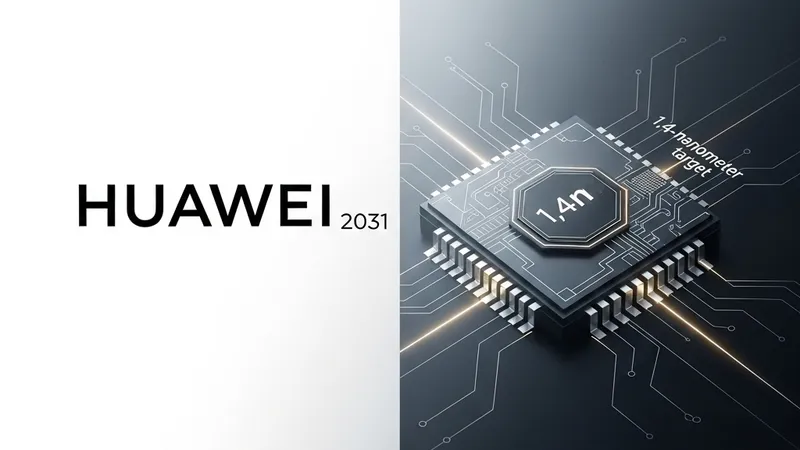
"Tao’s Law" advocates replacing traditional "geometric scaling" with "time scaling." It aims to systematically reduce the time constant (tau, τ) to compress signal propagation latency and continuously increase transistor density through logical folding. By 2031, premium chips designed under this law are projected to achieve transistor density equivalent to a 1.4nm process. He emphasized that the industry's future lies in open collaboration to drive global semiconductor advancement.
DeepSeek Tops OpenRouter Global API Usage Charts
In the AI sector, OpenRouter reported a total global LLM call volume of 28.9 trillion tokens from May 18 to May 24, marking a 7.4% week-on-week increase and the fifth consecutive weekly rise. Notably, weekly calls for Chinese AI models reached 9.22 trillion tokens (+19.89%), surpassing the US (4.93 trillion tokens, +16.27%) for the fourth consecutive week. DeepSeek-V4-Flash secured the top spot globally on OpenRouter, demonstrating the surging demand and cost-efficiency of Chinese frontier models among global developers.
Apple Watch Needs to Reboot Health Narrative
Bloomberg's Mark Gurman reported that Apple Watch is facing stiffer competition from wearable competitors like Oura, Whoop, and Fitbit. Although the Apple Watch has expanded into health tracking (heart rate, sleep, hearing aid, fall detection), recent hardware iterations have been incremental, lacking a compelling growth narrative. While rivals capture core users with specialized form factors and subscription-based high-frequency bio-data services, Apple needs to integrate its hardware, software, and health services more tightly around WWDC to reposition its personal health ecosystem.
Luxshare Precision: Coexistence of Optical and Copper Connections
Addressing AI server and datacenter interconnect demands, Luxshare Precision stated that its "optical and copper co-development" strategy aligns with leading clients' shifts towards optical chips. While short-distance applications still rely heavily on copper connections due to high technical barriers and cost-effectiveness, long-distance and ultra-high-speed scenarios will inevitably demand optical interconnects. The company anticipates that the market scale for optical connections will eventually dwarf copper, but both pathways will coexist long-term.
Unitree Robotics Targets IPO with 42 Billion RMB Valuation
According to Caixin, leading Chinese robotics company Unitree will undergo its IPO hearing on June 1, taking only 73 days from application acceptance to hearing. The offering values Unitree at a minimum of 42 billion RMB. Having turned profitable in 2024, Unitree's revenue for the first three quarters of 2025 surged to 1.167 billion RMB, with a net profit of 105 million RMB, propelled largely by its rapid expansion in humanoid robots, motion control, and developer ecosystems.
[AgentUpdate Depth Analysis] The Chinese AI value chain is undergoing a comprehensive paradigm shift, bridging hardware efficiency with agent-driven applications. DeepSeek-V4-Flash's top ranking on OpenRouter underscores a crucial reality of the AI Agent era: the demand for low-latency, hyper-affordable APIs is skyrocketing. As multi-agent systems and Model Context Protocol (MCP) workflows require continuous, high-frequency execution loops, API cost and throughput have replaced sheer model size as the vital metrics for ecosystem scalability. Concurrently, on-device silicon breakthroughs, like those promised by Huawei's Tao's Law, combined with the rapid maturity of embodied AI players like Unitree, are building the physical and computational foundation for decentralized, edge-native agents. The convergence of highly optimized edge silicon and ultra-low-cost cloud intelligence will serve as the dual engine powering the next phase of the Agent ecosystem.