Google AI Overviews (AIO) and Google AI Mode represent a paradigm shift in search optimization, driven by the Gemini 3 Pro engine family since January 2026. While sharing a 13.7% citation overlap, they function as distinct optimization targets. The defining development is "citation decoupling"—meaning classic organic ranking positions no longer dictate visibility on these AI-driven interfaces. Instead, eligibility is determined by structural readability and entity authority.
By Q1 2026, AI Overviews appeared on approximately 48% of all Google searches, rising to over 70% for informational and how-to queries. Crucially, organic position 1 CTR drops by up to 61% when an AI Overview is present. Conversely, winning a citation on these surfaces drives roughly 35% more clicks than non-cited top 10 results, and cited visitors convert at an astonishing 23 times the rate of standard search visitors.
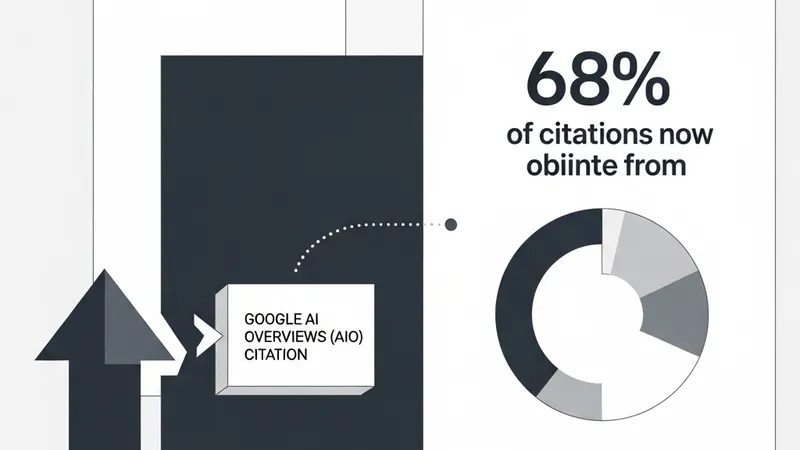
Industry studies confirm this decoupling trend. A December 2025 Surfer SEO study of 173,902 URLs revealed that 68% of AIO citations originate from outside the top 10 organic rankings. Similarly, a February 2026 Ahrefs study of 863,000 keywords showed only 38% of cited pages ranked in the organic top 10, down from 76% in mid-2025. This proves that structural schemas, entity-level semantics, and real-time freshness signals have superseded traditional page rank.
To action these findings, the framework defines three operating modes: Mode A (Install Mode) to build AIO-ready infrastructure; Mode B (Audit Mode) to evaluate current performance; and Mode C (Hybrid Mode) to audit first and fix gaps. These protocols ensure sites meet the rigorous technical standards demanded by Google's decoupled search surfaces.
[AgentUpdate Depth Analysis] The decoupling of citations from organic search rankings on Google’s Gemini-driven engine marks a milestone in the evolution of RAG (Retrieval-Augmented Generation) systems. By shifting the selection criteria from legacy backlink authority to structural readability and entity-level semantic mapping, Google is training its LLMs to act as proactive AI Agents that ingest, verify, and cite knowledge directly. For the broader AI Agent ecosystem, this highlights a critical transition: future discovery and transactions will be driven by Agent-to-Agent discovery. Websites must restructure their data pipelines from human-centric readability to machine-ingestible semantic entities. Adapting to this schema-first optimization is not merely about preserving SEO traffic; it is about ensuring that your business services and APIs remain discoverable by the autonomous AI Agents of tomorrow.