With the rapid expansion of the ChatGPT search ecosystem, traditional SEO rules are being fundamentally rewritten. ChatGPT reached approximately 900 million weekly active users by February 2026, processing about 2.5 billion prompts per day. ChatGPT Search alone processes an estimated 250 to 500 million weekly queries, positioning itself among the top five global search properties. To secure citations and brand mentions across OpenAI's web search augmented surfaces, developers must understand the underlying retrieval architecture.
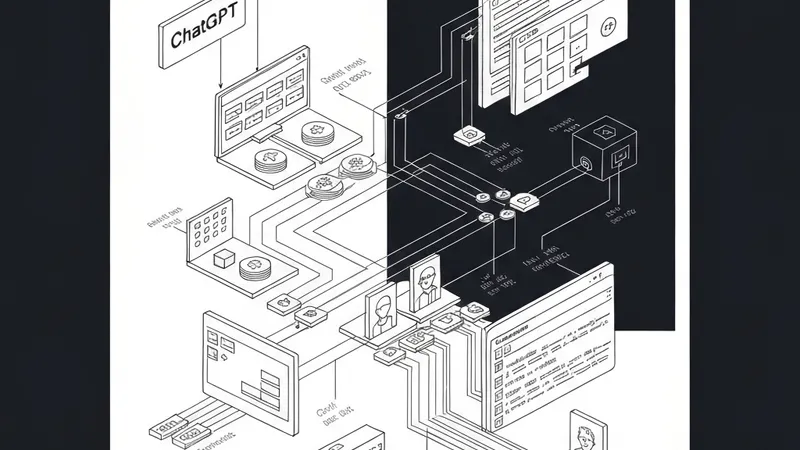
The OpenAI search surface family consists of distinct but integrated interfaces: ChatGPT Search (launched October 31, 2024), the SearchGPT prototype (launched July 25, 2024), the ChatGPT Agent (integrated July 17, 2025, replacing the Operator preview), and ChatGPT Atlas (the Chromium-based browser launched October 21, 2025). While they share a bot family, index dependencies, and retrieval patterns, each surface exhibits unique citation behaviors. This framework details the structural, schema, freshness, entity, and access signals required to earn brand visibility on these surfaces.
Crucially, OpenAI's retrieval mechanism differs structurally from Google's AI Overview. They rely on different bot families, have distinct reading mode behaviors, and exhibit different brand-mention-to-citation ratios. OpenAI surfaces also have unique freshness windows and source preferences. For instance, Wikipedia and Reddit dominate OpenAI citations, accounting for 13.15% and 11.97% of US ChatGPT citations respectively, according to 5W Public Relations. Optimizing solely for Google’s search algorithms will not guarantee visibility on ChatGPT Search.
To support cross-stack implementations, this framework covers deployment references for plain HTML, React, Vue, Svelte, Next.js, Nuxt, Astro, WordPress, Shopify, and Webflow. Developers must tailor their tech stacks—especially client-rendered SPAs versus SSR/SSG architectures—to ensure compatibility with OpenAI's crawling and indexing pipelines.
[AgentUpdate Depth Analysis] The transition from a passive search engine to an active agentic ecosystem (driven by ChatGPT Agent and the Atlas browser) signals a paradigm shift from Search Engine Optimization (SEO) to Agent Engine Optimization (AEO). While traditional search engines act as traffic aggregators, AI Agents act as autonomous task-executors. For developers and brands, this means that unstructured content must be replaced by high-fidelity, machine-readable semantic structures. OpenAI's reliance on Wikipedia and Reddit highlights a preference for structured entity graphs that minimize LLM hallucination. As Atlas and other Agent-centric browsers become the primary interfaces for user decision-making, missing out on Agent citations means total invisibility in the next-generation web. Forward-looking tech stacks must treat Agent accessibility as a first-class citizen, ensuring content is optimized not just for human readers, but for autonomous retrieval agents.