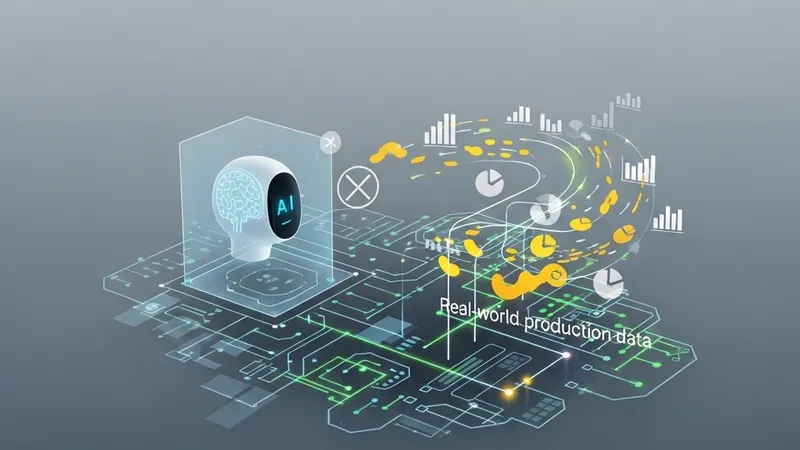
AI has become an indispensable part of software development, reading code, suggesting fixes, and explaining concepts at lightning speed. However, there is still one glaring limitation: AI cannot inspect your actual, live database. This turns out to be a much bigger bottleneck than it sounds.
Consider a typical debugging scenario: you get a Sentry alert, and paste the stack trace into Claude. The AI reads the error, parameters, and line numbers, and guesses what went wrong. But it is just a guess. The AI has no visibility into what the actual user record looked like, the state of associated objects, or whether this error is a one-off or a systemic issue affecting an entire user segment.
As a developer, you end up acting as the AI's "hands"—manually running queries and pasting the results back. By integrating an MCP (Model Context Protocol) server into your Rails app, the AI can investigate independently. It can describe your Rails models, fetch the relevant database records, and deliver a precise diagnosis: "Users hitting this error all have onboarding_completed_at null but subscription_active true, suggesting they skipped a step in the flow." No back-and-forth copy-pasting is required.
The same power applies to business intelligence. If a product manager wants to know if a feature launched three months ago is being used, you would typically write a SQL query or build a quick report. With your data accessible via MCP, you can simply ask the AI in plain English: "How many users have used the new export feature in the last 30 days? Break it down by plan." The AI calls the appropriate ActiveRecord tools, aggregates the data, and returns the breakdown in seconds. It bridges the gap between an AI that merely knows your codebase and one that understands your production runtime.
Direct database access via a raw SQL connection is unsafe due to risks like uncontrolled joins, master database load, and data leaks. Tools like activerecord-mcp resolve this by routing AI queries through the application layer (ActiveRecord). Conditions are validated against actual column names, sensitive data like password_digest are blocked by regex deny lists, and all queries run against a read-only role scoped by OAuth 2.1 tokens. It applies standard internal API security practices directly to AI interactions.
[AgentUpdate Depth Analysis] The emergence of MCP (Model Context Protocol) is redefining the interaction paradigm between AI Agents and enterprise data. Previously, Agents were constrained by static codebases or raw, unmanaged database access, both of which pose massive security and operational risks. By routing Agent queries through the application's ORM layer (like ActiveRecord), developers can safely expose rich context without bypassing business logic or security guardrails. This paradigm shift transitions AI Agents from simple code completion assistants into autonomous "digital coworkers." They can now securely perform closed-loop troubleshooting and analytical workflows in production, unlocking the true potential of the Agentic ecosystem while preserving enterprise data governance.