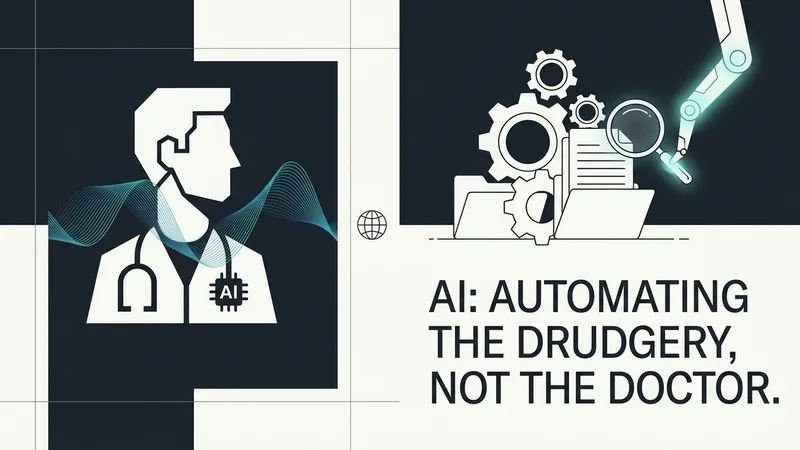
For years, modern healthcare has struggled with a paradox: digital tools designed to improve efficiency have instead turned doctors into data entry clerks.
Studies show that for every hour spent with a patient, clinicians spend up to two hours documenting in Electronic Health Records (EHRs). This administrative burden is a leading driver of clinician burnout and alienates patients, who often find themselves speaking to the back of a doctor's laptop.
However, the rise of Generative AI and Ambient Clinical Intelligence is reversing this trend. By deploying medical-grade LLMs and speech recognition, AI assistants can "listen" to clinical conversations and generate structured clinical notes in seconds.
This shift liberates doctors from keyboards, allowing them to restore eye contact and empathy to patient care. Pilot programs show that AI-assisted documentation can cut clinical writing time by up to 50% while significantly boosting patient satisfaction scores.
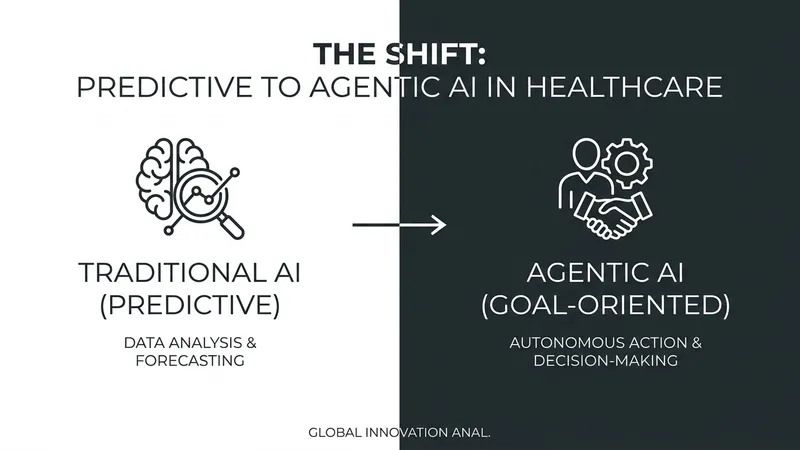
Furthermore, healthcare AI is evolving from a passive scribe into an active clinical co-pilot. Future AI Agents will proactively retrieve lab results, flag potential drug interactions, and draft referral letters, streamlining the entire clinical workflow.
[AgentUpdate Depth Analysis] The evolution of healthcare AI exemplifies the transition of AI Agents from passive tools to proactive clinical partners. What began as simple dictation has evolved into multimodal ambient intelligence capable of understanding complex, unstructured clinical dialogue. This represents a gold standard for vertical AI Agent deployment: agents integrated into EHR systems, possessing advanced reasoning, tool-use, and strict compliance capabilities. The long-term impact on the AI Agent ecosystem is profound. Healthcare's extreme demands for accuracy, privacy (HIPAA), and alignment will push the boundaries of agent reliability, safety guardrails, and reinforcement learning. Ultimately, clinical AI agents will not only alleviate burnout but democratize high-quality, personalized healthcare globally.