As users increasingly turn to AI engines like ChatGPT, Perplexity, Claude, Gemini, Microsoft Copilot, Grok, and Google's AI Overviews for answers, content creators and technical teams face a fundamental paradigm shift. The question is no longer "do we rank in search engines?" but rather "do we get cited by AI?" AI Citation has rapidly emerged as the new center of gravity for search visibility across the web.
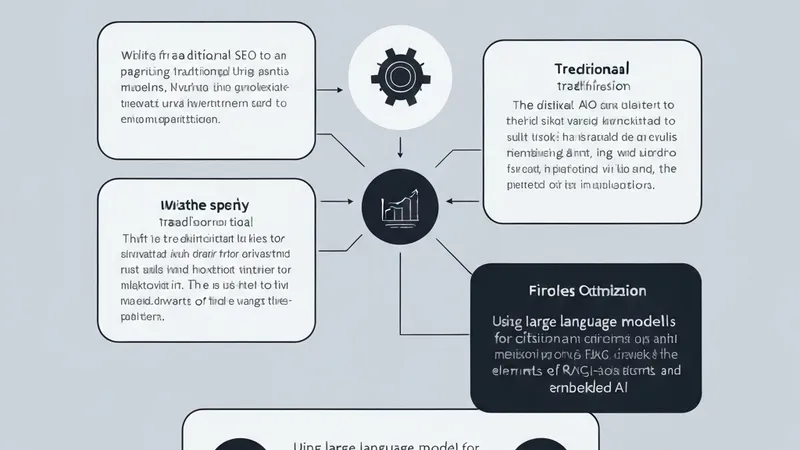
The technical mechanics of AI Citation diverge significantly from traditional SEO. AI engines rely on Retrieval-Augmented Generation (RAG), real-time search APIs, embedding-based similarity, freshness signals, and dynamically calculated authority weights to choose their sources. While some traditional SEO signals—such as E-E-A-T (Experience, Expertise, Authoritativeness, Trustworthiness), entity authority, and structured schema—remain relevant, LLMs evaluate content on entirely new dimensions. These include chunk-level coherence, factual density, citation-worthiness, and embedding distinctiveness in semantic vector spaces.
To adapt to this transition, technical teams can utilize three distinct operating modes. First, "Install Mode" focuses on building AI citation optimization infrastructure directly into the site's codebase. Second, "Audit Mode" evaluates current citation status and visibility across major LLM engines. Finally, "Hybrid Mode" combines both approaches by auditing the existing footprint and installing targeted upgrades on failing pathways.
[AgentUpdate Depth Analysis] AI Citation Optimization (AICO) is not merely the next phase of SEO; it is the infrastructure foundation for the emergent AI Agent ecosystem. As autonomous agents transition from passive chat interfaces to active decision-makers that execute complex tool-use workflows, they rely entirely on highly reliable RAG pipelines to justify their actions. In a vector-driven world, traditional keyword stuffing and fluff are parsed out as noise. Content creators must shift to publishing high-density, structured, and semantically unique "knowledge chunks". If your technical documentation or brand content cannot be parsed and cited at the chunk level by an LLM, your business will effectively suffer from "Agent Blindness"—becoming completely invisible to autonomous agents executing purchasing, coding, or research tasks. Optimizing for AI citation is optimizing for agent-executable survival.