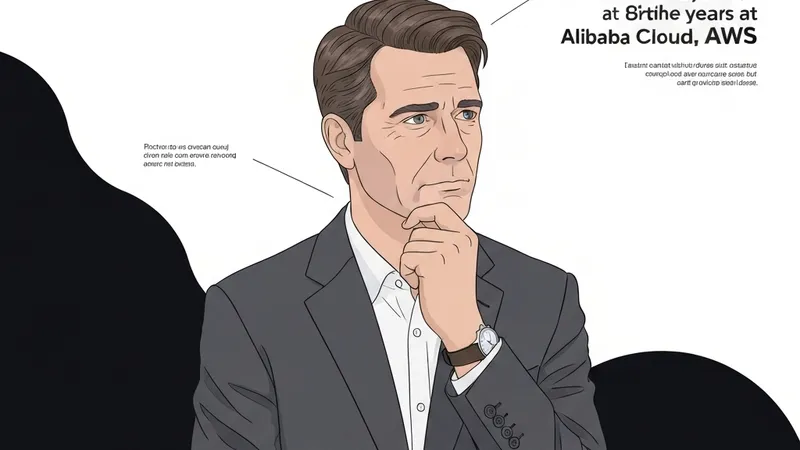
A seasoned cloud sales executive, after dedicating eight years to Amazon Web Services (AWS) and Alibaba Cloud, faced an unexpected layoff at 42. He has since embarked on a new entrepreneurial journey, launching his own AI-powered cloud business from Kuala Lumpur, amidst significant financial and operational uncertainties.
His annual income plummeted from over $200,000 to approximately $800 per month, as he single-handedly operates a cloud business powered by AI agents. This dramatic shift has brought profound self-doubt and financial pressure. He has imposed a strict deadline on himself: if his business fails to reach $7,000 in monthly revenue by September 30th, he will be compelled to return to traditional employment.
He reflects that for a 42-year-old with two children in international school, leaving big tech, the most perilous moment wasn't the firing itself. Instead, it was the years prior, when everything was going exceptionally well, and he made no preparations for potential future downturns.
During his four-year tenure at Alibaba Cloud, he gained intimate knowledge of the intense big tech sales culture in China, where "the number" dictated one's entire professional existence—performance reviews, bonuses, and job security. As a senior representative, he mastered the playbook: identify channel partners, navigate internal policies for them, and bring in third-party guarantors to facilitate cash flow, thereby boosting his sales figures.
However, this strategy was fraught with risk. There was constant apprehension that a partner might leverage guaranteed credit, achieve impressive sales, and then default on payments, with that risk ultimately resting on his shoulders. Quarterly, he would lobby finance for larger credit lines, understanding that bigger lines translated to bigger numbers, which in turn meant job security. He perfected this cycle over several years but grew to despise every aspect of it.
In his final year at Alibaba, he chose to disengage from this "game." He channeled all his efforts into an innovation project: a voice-based IoT platform designed for public transit. He spearheaded its development from scratch, bringing together technology partners and formulating the go-to-market strategy. The project was successfully showcased at Yunqi Conference, Alibaba's largest annual event, where he presented it directly to the President of Alibaba Cloud. His immediate superior was highly supportive, granting him the autonomy to pursue this innovation. However, his boss's departure led to a new leadership whose sole focus was sales numbers, which he lacked. A Performance Improvement Plan (PIP) became inevitable. Despite successfully meeting the PIP targets through veteran tactics—and Alibaba would have allowed him to stay—he was resolute in his decision to leave, recognizing that the "game" remained unchanged, and he no longer wished to play.
Subsequently, he joined AWS, and for a period, it felt like a significant triumph. Amazon's stock, trading around $120 when he joined, more than doubled over the following years. This stock appreciation, combined with consistent target achievement and top-tier bonuses, propelled his total compensation beyond $200,000 annually.