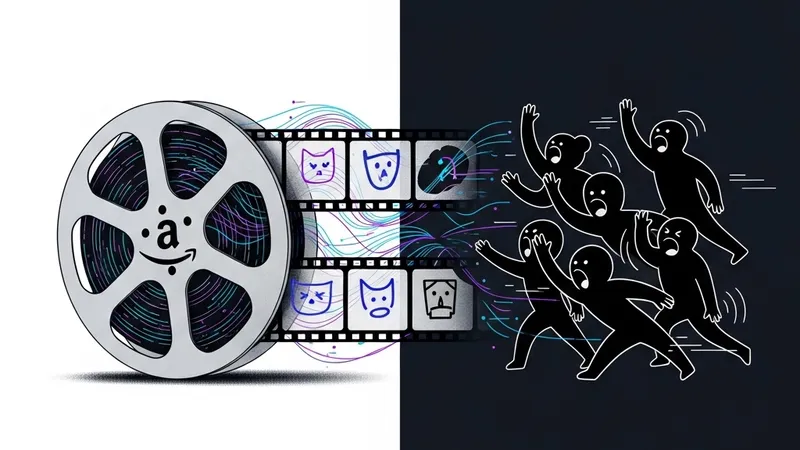
Earlier in May, Hollywood took significant steps toward integrating generative AI into the animation industry. Both Netflix and Amazon announced plans to utilize this controversial technology to create animated shows for their respective streaming platforms. Amazon took it a step further by establishing an animation fund to lend its proprietary AI tools to creators, alongside announcing a trio of Prime Video shows born from this initiative.
However, the reaction from the animation community was overwhelmingly negative, with intense backlash surrounding two specific series: Punky Duck by El Tigre creator Jorge R. Gutierrez, and BuzzFeed Studios’ Cupcake & Friends. Loryn Brantz, the original creator of the "Good Advice Cupcake" character that headlines the latter series, fiercely condemned BuzzFeed. She accused the company of "taking my character and giving it to an AI platform," claiming that during her tenure, BuzzFeed repeatedly assured her in good faith that it would not use her character without her direct involvement.
Brantz lamented that she was never provided with the necessary legal protections to enforce those verbal assurances, resulting in the creation of Cupcake & Friends. Hearing that her character was being recreated using Amazon's generative AI technology made her feel "like my intestines were pulled out of my body." She further claimed that BuzzFeed's CEO, Jonah Peretti, attempted to make her sign an NDA after she pleaded with him to scrap the deal. Having refused to sign, she called the project "an assault on artists everywhere" and urged the public to boycott BuzzFeed and all AI-produced animation.
Meanwhile, director Jorge R. Gutierrez faced the brunt of the community's fury. Previously celebrated for his acclaimed projects and his public criticism of generative AI in Hollywood, his decision to join the program with "cautious optimism" was poorly received. After comparing the technology to "having sex and then they hand you the baby," the backlash escalated to the point of death threats against his family. Gutierrez swiftly condemned the threats and announced his departure from the program.
"Actions speak louder than words," Gutierrez posted on social media, apologizing for upsetting the community and officially canceling the Punky Duck series. "My intent was to showcase artists, both new and seasoned, both inside and outside the studios, driving this new tech." As reports note, while the animation scene is heavily targeted for AI disruption, the intense resistance from creators suggests that the road to AI adoption in creative industries will be fraught with systemic friction.
[AgentUpdate Depth Analysis] The severe backlash Amazon faced highlights a fundamental conflict of production relations between "Generative AI productivity" and "creator IP rights." As we move towards an AI Agent-driven ecosystem, this friction will only intensify. Future AI Agents are evolving from simple text generators into autonomous creators capable of orchestrating multi-modal models to design characters, write scripts, and generate entire animations. If these Agents are trained on unauthorized creative assets without fair attribution or revenue-sharing models, they will face immense legal and ethical hurdles. For AI developers, the key takeaway is that building "creator-centric AI Agent frameworks"—which integrate IP verification, smart contracts, or royalty-sharing APIs—is crucial for the sustainable adoption of AI in the creative economy. Pushing technology down creators' throats will only deepen the divide.