Tech CEOs have a lot to manage, from earnings calls and board meetings to competition and employee morale. Now, in the age of AI, they also need a "boo strategy."
This year, graduates have heckled some executives during commencement speeches after corporate leaders made optimistic comments about AI, reflecting a growing anxiety among students about to enter the job market. Students booed former Google CEO Eric Schmidt at the University of Arizona, while Big Machine Records CEO Scott Borchetta drew backlash at Middle Tennessee State University after discussing AI's impact on music and media.
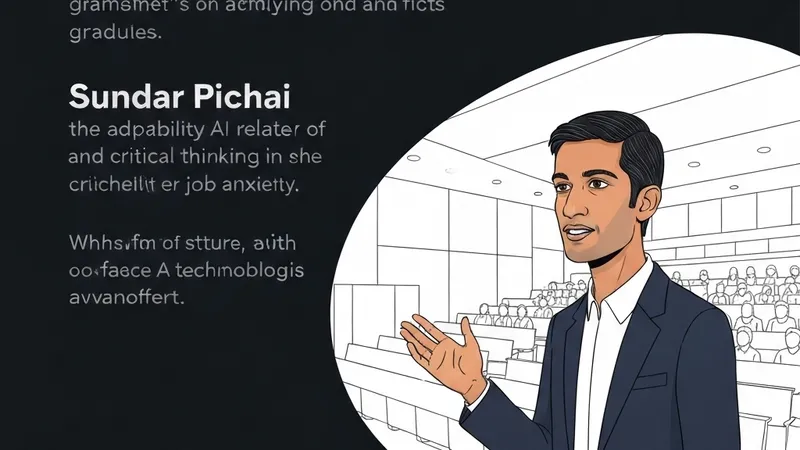
So the hosts of the tech podcast "Hard Fork" recently asked Google CEO Sundar Pichai what his "boo strategy" will be when he delivers the commencement speech at Stanford University next month.
For Pichai, the challenge is real: He leads one of the companies driving the AI boom at a time when many graduates worry the technology could evaporate the jobs they're about to pursue. "I've always been extraordinarily optimistic about the next generation," he told the hosts. AI, he said, doesn't change that. "My goal would be to share my experiences, and that's what I'm looking to do."
"These graduates are actually both going to be a big part of driving that progress and also dealing with the impact," he added, referring to AI.
It's possible Pichai will be met with a more receptive crowd at Stanford, which is in the heart of Silicon Valley and home to some of the most talked-about AI courses in the country. Still, the perception of AI among the public remains low. A Pew Research Center study found that about half of Americans felt the increased prevalence of AI in their daily lives made them feel "more concerned than excited." Meanwhile, many Americans across the country are resisting new data centers in their communities, which are essential to powering AI products like chatbots.
At least a dozen major companies have cited increased efficiency from AI as a factor in their decision to lay off employees this year, making job anxiety more tangible than ever.
[AgentUpdate Depth Analysis] The backlash from graduates highlights a profound anxiety regarding AI-driven job displacement. As the AI Agent ecosystem transitions from simple LLM wrappers to sophisticated Multi-Agent orchestration frameworks, entry-level cognitive tasks—traditionally the entry point for new graduates—are being automated at scale. However, this shift does not render human talent obsolete; rather, it redefines the human role from executioner to "Agent Conductor." To build a resilient career in this new era, future professionals must master prompt engineering, agentic workflow design, and human-in-the-loop governance. The future of productivity lies in collaborative intelligence, where human critical thinking guides autonomous agent networks, reshaping the global labor market and educational paradigms.