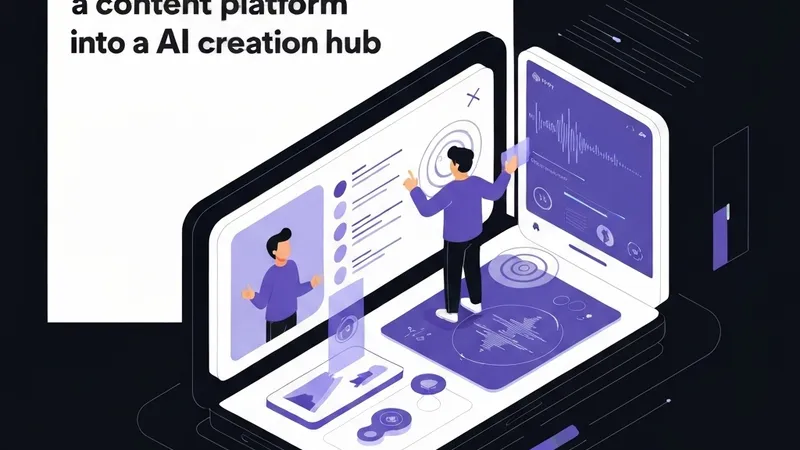
For users, Spotify has long been a destination to consume podcasts created by others. The company is now actively shifting that paradigm by introducing a "personal podcast" feature. This tool leverages AI to generate customized podcasts for users based on a single idea or a custom prompt.
Earlier this month, Spotify released a GitHub-based command-line tool designed for Claude Code and Codex, enabling users to programmatically create a podcast and save it directly to their own Spotify library. The company announced that users will soon be able to generate these podcasts directly within the main Spotify app. Additionally, they can schedule recurring daily or weekly briefs for topics of ongoing interest, or generate one-off podcasts to quickly understand a specific concept.
Users can make prompts like "Share my daily city updates, and tell me about local concerts from artists I love," or "Help me understand economics in five minutes" to generate a podcast and save it for personal listening. Furthermore, users can upload external links, PDFs, and plain text, and select a custom voice to generate the content. This workflow closely mirrors Google's NotebookLM, ElevenLabs Reader, and the former NotebookLM developers' app Huxe, democratizing personalized audio generation.
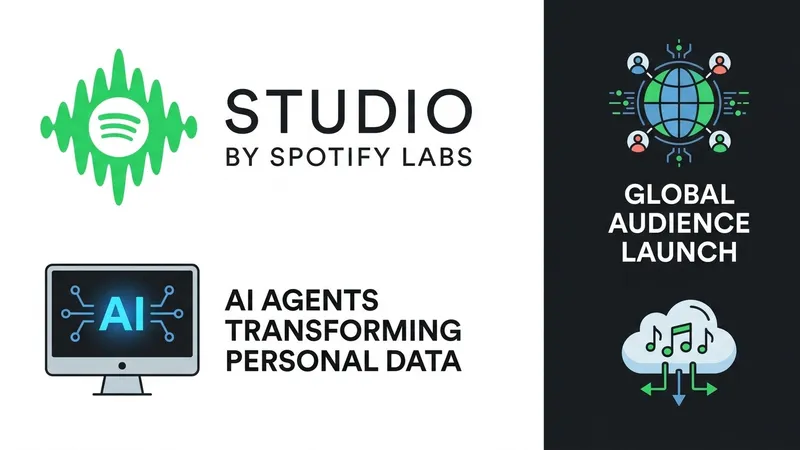
To support this ecosystem, Spotify also released a dedicated desktop application called "Studio by Spotify Labs," which can securely connect with users' email and calendar accounts to generate highly personalized daily briefings.
For consumer interaction, the company is rolling out an AI-powered Q&A feature today for Premium mobile users in the U.S., Sweden, and Ireland. With this feature, listeners can ask direct questions about the specific episode they are playing or a concept mentioned in the audio, and receive immediate answers. They can also request tailored podcast recommendations. This follows the company's April release of a prompt-based podcast playlist generator.
Until now, Spotify's primary growth driver has been video podcasts, with streams growing 50% year-on-year. With this latest release, Spotify aims to deepen user engagement via interactive dialogue—similar to Google's "Ask YouTube" feature launched earlier this week. For content creators, Spotify is expanding its sponsorship management tools and adding subscription models to unlock exclusive content, aligning its monetizing capabilities with features seen on Meta and Snap.
[AgentUpdate Depth Analysis] Spotify's transition toward personalized AI-generated audio marks a crucial milestone in the AI Agent ecosystem. By integrating "Studio by Spotify Labs" directly with users' personal data sources like calendars and emails, Spotify is effectively transforming from a passive media library into an active, ambient Agent. This represents a structural shift from traditional, reactive chat-based interfaces to proactive, voice-first synthesis. In the broader Agent landscape, highly customized text-to-speech serves as a frictionless bridge for consuming dense information on the move. Given Spotify’s massive footprint in mobile, smart home, and connected-car ecosystems, this feature positions the company to become a leading platform for ambient intelligence, redefining how personal Agents deliver synthesized daily value to users.