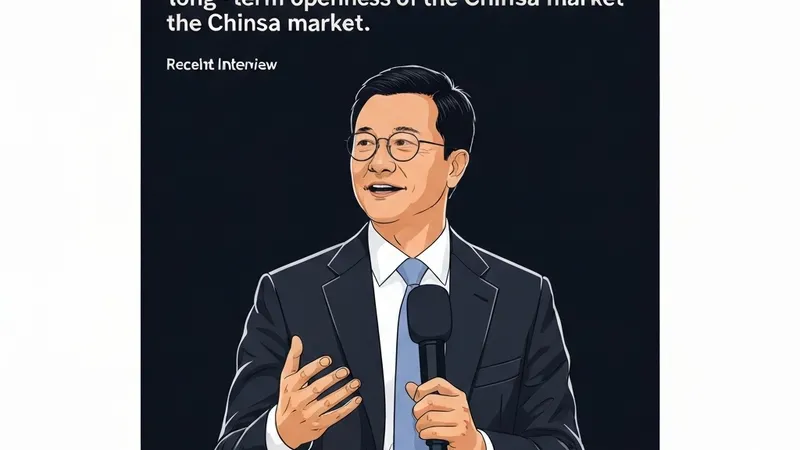
Nvidia's co-founder and CEO, Jensen Huang, expressed a highly optimistic outlook for the future of China's AI market, forecasting that it will evolve into a more open and hyper-competitive ecosystem. Despite stringent export controls imposed by the US government on advanced computing hardware, Chinese technology giants and emerging startups are accelerating their efforts to establish self-reliant technological stacks.
Huang highlighted that China's prowess in software development, large language models (LLMs), and AI application layers remains formidable. Driven by continuous iterations from tech giants like Alibaba, Tencent, and ByteDance, alongside the global rise of Chinese open-source models like DeepSeek and Qwen, the Chinese market is fostering a unique, resilient paradigm of AI innovation. This shift has not only catalyzed domestic GPU alternatives but has also compelled developers to pioneer breakthrough efficiencies in algorithmic optimization and edge-device AI applications, such as AI Agents.
Addressing global supply chain and regulatory compliance, Huang reiterated that Nvidia will strictly adhere to US government regulations while remaining fully committed to serving Chinese clients with compliant, tailored products. He emphasized that an open and competitive Chinese market is not only vital for Nvidia’s business but also acts as a critical catalyst for driving global semiconductor and AI innovation forward.
[AgentUpdate Depth Analysis] Jensen Huang’s projection of a more "open" Chinese market highlights a critical pivot in the global AI Agent ecosystem: hardware constraints are increasingly being offset by algorithmic ingenuity and open-source synergy. While top-tier compute access remains restricted, Chinese developers excel in lightweight model optimization, multi-agent orchestration, and localized vertical integration (such as embodied AI and autonomous systems). Unlike the compute-heavy, closed-source path favored by Silicon Valley leaders like OpenAI and Anthropic, China’s ecosystem embraces a highly pragmatic, cost-efficient approach. This divergence suggests that the next generation of AI Agents will not merely be defined by raw FLOPs, but by edge-device heterogeneous computing, swarm intelligence, and localized deployment efficiency.