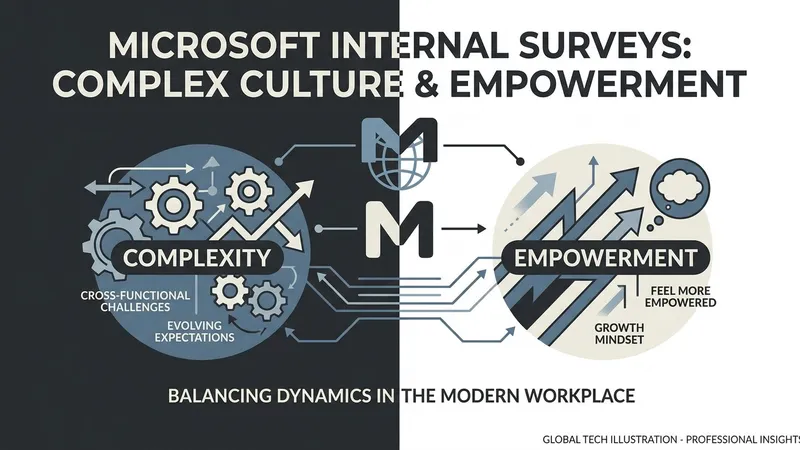
A recent internal memo at Microsoft has shed light on the evolving sentiment within the software giant as it aggressively pivots toward an AI-first strategy. Chief People Officer Amy Coleman highlighted the company's "top strengths" and "top opportunities" based on the latest employee feedback, noting that staff feel increasingly "energized" and "empowered" to contribute to meaningful work amidst the current AI boom.
However, the survey results also surface significant friction. Employees expressed growing dissatisfaction with coaching, feedback, and motivational support from middle management. This sentiment coincides with several recent operational shifts: the company has intensified performance requirements, reorganized its HR functions regarding compensation and promotion, and introduced buyout packages for veteran staff. While these moves are aimed at streamlining the organization for the AI era, they have clearly contributed to a climate of uncertainty.
Coleman acknowledged in the memo that the company is undergoing a period of "intense and exciting change," noting that many employees are struggling with the pressure and volatility inherent in the current industrial evolution. The juxtaposition of high-mission alignment and high-level anxiety defines the current state of Microsoft’s internal culture.
[AgentUpdate Depth Analysis] Microsoft’s organizational tension serves as a precursor for the broader tech industry as it shifts toward an AI Agent-centric paradigm. From a technical and architectural standpoint, the transition to Agentic workflows isn't merely about deploying Large Language Models—it’s about fundamentally shifting the unit of productivity from the individual to the AI Agent. The "hollowing out" of middle management feedback, as noted in the survey, suggests that traditional managerial metrics are becoming obsolete in a workflow where Agents handle execution. When comparing this to the internal struggles at companies like Google or Meta, it is clear that the challenge is structural: firms must pivot from legacy KPIs to metrics that prioritize Agent-human synergy and high-level architectural oversight. If leadership fails to adapt, this "management gap" will erode the developer culture, potentially stalling the very velocity needed to win the Agent ecosystem wars. The future of the Agent economy will belong to organizations that can successfully reconcile these high-pressure, high-output environments with a new, autonomous-friendly management ethos.