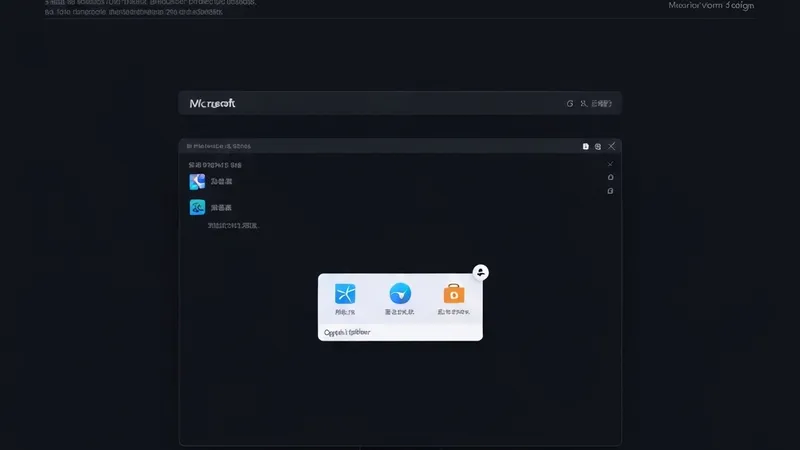
Microsoft is testing a significant interface redesign for Copilot in the latest Windows 11 preview builds, introducing a new "pinnable" sidebar that can be docked to the side of the screen.
Unlike the previous design, which operated as a floating overlay that automatically dismissed itself when clicking away, the new sidebar behaves as a permanent workspace partition. When pinned, it automatically resizes all active application windows, pushing them aside to make room for Copilot. This invasive approach has sparked criticism among preview users, who complain about the loss of precious screen real estate to an AI widget.
The redesign signals Microsoft's aggressive push to transition Copilot from an on-demand chat window to an omnipresent desktop companion. By claiming a dedicated portion of the workspace, Microsoft aims to keep its AI capabilities front and center, integrating them deeply into the user's daily multi-tasking workflow.
[AgentUpdate Depth Analysis] Microsoft’s push for a pinnable Copilot sidebar is a strategic layout for the upcoming "Agent-Native OS" era. Compared to macOS's transient Siri or third-party AI widgets that adopt a "dismiss-on-click" model, Microsoft’s persistent sidebar establishes an "always-on context" gateway. For the AI Agent ecosystem, this permanent UI anchor is critical: it allows the underlying agent to continuously observe on-screen activities, enabling proactive workflows rather than just reactive chats. However, this design highlights a fundamental tension in UX: balancing proactive AI capability with user autonomy. Future OS-level AI agents must solve this riddle, delivering value without being perceived as desktop bloatware.