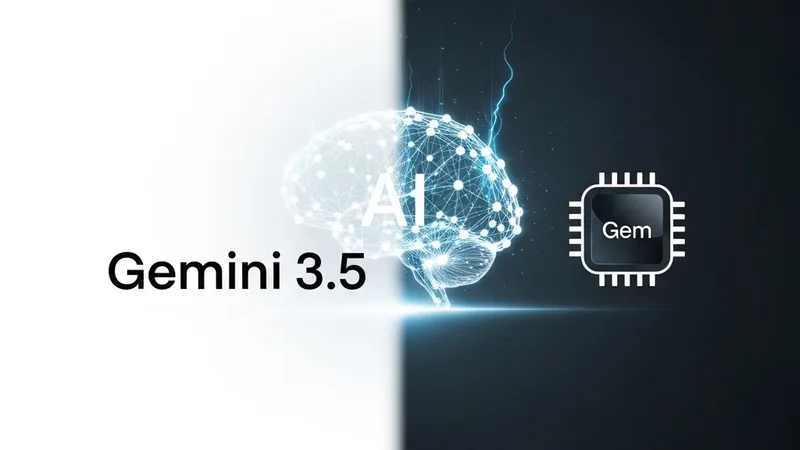
In the latest episode of the Last Week in AI podcast, hosts Andrey Kurenkov and Jeremie Harris dove deep into a historic week of AI developments, dominated by Google I/O 2026. Google unveiled its next-generation Gemini 3.5 suite, with a strong emphasis on the speed and benchmark performance of Gemini 3.5 Flash. Accompanying the model is Gemini Spark, an always-on AI agent running on Google Cloud with native Model Context Protocol (MCP) tool support. Google also introduced Gemini Omni, a multimodal powerhouse that converts images, audio, and text into rich video. Other key I/O updates included Antigravity 2.0 with a refreshed desktop app and CLI, AI tools optimized for scientific workflows, and the Genie world model, which can now simulate real streets using Google Street View and Waymo simulation data.
The battle for coding agents is accelerating rapidly. Cursor released Composer 2.5, fine-tuned on Moonshot’s Kimi K2.5, matching the performance of Opus 4.7 and GPT-5.5 at a fraction of the cost. xAI countered with an early release of its own coding agent, Grok Build. The hosts discussed potential ties between Cursor and xAI, alongside xAI’s current talent churn and compute utilization hurdles.
On the business and legal front, Elon Musk lost his high-profile lawsuit against OpenAI due to statute-of-limitations issues. Tensions are reportedly fraying in the OpenAI-Apple partnership, setting up potential legal conflicts, while Greg Brockman officially took control of OpenAI’s product division. Meanwhile, Anthropic secured a mammoth $30 billion funding round at a $900 billion valuation, projected its first profitable quarter, and successfully recruited OpenAI co-founder Andrej Karpathy to its pre-training team. In hardware, Cerebras’ IPO surged nearly 90%.
In research and safety, OpenAI successfully solved an 80-year-old Erdős geometry problem. New studies shed light on "negation neglect" in LLM training and interpretability work revealing redundant circuits for single capabilities. Agent benchmarking advanced with frameworks like Terminal World, while the AI safety community demonstrated increasingly sophisticated autonomous hacking and self-replication capabilities, prompting new enforcement measures under the Take It Down Act.
[AgentUpdate Depth Analysis] Google's decision to bake native MCP (Model Context Protocol) support into Gemini Spark is a watershed moment for the AI Agent ecosystem, signaling that industry giants are ready to align on open standards for agentic tool use. Rather than building proprietary walled gardens, Spark's adoption of MCP will pressure the industry toward unified interoperability, making it seamless for agents to leverage diverse toolkits across cloud environments. Simultaneously, the clash between Cursor Composer 2.5 and xAI's Grok Build highlights that coding agents are transitioning from simple code-completion autocomplete features to autonomous, system-level software engineers. As these agents integrate deeper with world models like Genie and robust benchmarking environments like Terminal World, we are witnessing the construction of a highly autonomous, multi-agent future that will radically redefine software development, research workflows, and cloud-native automation.