As AI programming assistants like Claude Code, Cursor, and Codex become essential to developer workflows, they also introduce critical bottlenecks: strict context window limits, high latency from cloud-based retrieval, and severe privacy concerns regarding proprietary code. To address these challenges, I built 'LoCoMo', a local-first memory system designed to manage and retrieve local code contexts with extreme efficiency.
LoCoMo achieves outstanding benchmarks: a p50 query latency of just 70ms and a 94.5% recall@10 rate. The system's performance relies on three core architectural designs. First, it utilizes a lightweight, Rust-based local vector database to eliminate network I/O overhead. Second, it leverages a tree-sitter-based Abstract Syntax Tree (AST) parser to perform precise structural and incremental indexing of the codebase. Finally, it employs a hybrid search strategy, combining lexical search and semantic vector embeddings, optimized by a fast local reranking pipeline.
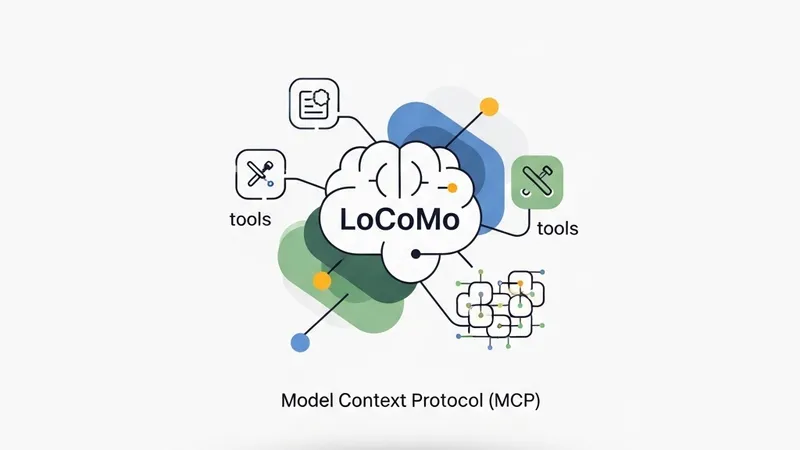
Crucially, LoCoMo is built on top of Anthropic's Model Context Protocol (MCP). Running as a local MCP server, it integrates seamlessly with Claude Code's CLI or Cursor's custom MCP settings. A background file watcher handles millisecond-level incremental updates as you code, ensuring that the index is always fresh without blocking your development flow.
[AgentUpdate Depth Analysis] The combination of local-first architecture and standardized protocols like MCP marks a pivotal evolution in AI Agent infrastructure. Traditional cloud RAG models struggle with bandwidth costs, volatile latency, and strict privacy boundaries. LoCoMo demonstrates that offloading AST parsing, lightweight vector indexing, and incremental synchronization to the local edge can achieve near-perfect context awareness at near-zero hardware cost (70ms latency). This sets a new design pattern for personal and enterprise code Agents: while the reasoning engine (LLM) remains in the cloud, the cognitive memory and perception layers must reside locally. As MCP adoption accelerates, localized memory architectures will become the default standard for securing and accelerating developer agent workflows.