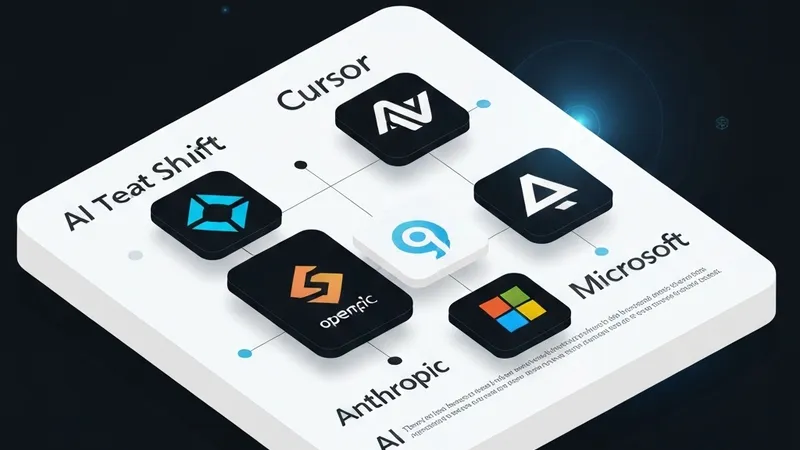
The artificial intelligence landscape is witnessing a significant evolution, moving beyond the mere development of foundational models towards a new frontier: specialized #runtime environments for AI agents. Major industry players, including Cursor, OpenAI, Anthropic, and Microsoft, are actively spearheading this transition, collectively pushing the boundaries of #AI infrastructure.
This emerging paradigm is encapsulated by the concept of "#harness-as-a-service." It refers to a new layer of AI infrastructure designed to provide pre-configured, optimized runtime environments that enable AI agents to function effectively and efficiently. Traditionally, developers building AI agentic applications would need to assemble complex components, integrating various models, tools, and execution frameworks from scratch. This process is often resource-intensive, time-consuming, and presents a high barrier to entry for innovation.
With "harness-as-a-service," the core idea is to democratize agent development by offering these sophisticated runtime environments as a rentable service. This shift dramatically alters the creation process for developers, allowing them to bypass the arduous task of setting up every piece of the agent's operational stack. Instead, they can leverage robust, managed platforms that provide the necessary "harness" for agents to operate, interact, and deliver value.
Experts suggest that "harness-as-a-service" is poised to become one of the defining categories of the current AI agent era. By abstracting away the complexities of infrastructure setup, it empowers builders to focus primarily on the agent's logic, capabilities, and application-specific tasks. This operational model is expected to accelerate the development cycle for agentic applications significantly. The next wave of innovative AI applications, therefore, is likely to emerge from environments where developers rent these sophisticated runtimes, enabling faster iteration and broader experimentation, rather than investing heavily in building foundational infrastructure from the ground up.