At its annual Google I/O 2026 event on Tuesday, Google announced that the Gemini app is getting a series of major updates, including a "Daily Brief" feature, a redesigned interface, access to a new AI video model called Gemini Omni, and a new personal AI agent called Gemini Spark.
The updates signal Google’s push to transform the Gemini app into an all-purpose AI hub rather than a stand-alone chatbot, making the AI assistant more competitive against rivals like ChatGPT and Claude.
Google describes the new Daily Brief feature as a personalized digest designed to be your first stop each morning. It pulls together information from a user’s inbox, calendar, and most important tasks, and then organizes them into a clear overview. The company notes that Daily Brief doesn’t just summarize this information—it also prioritizes tasks and suggests next steps, displaying the most critical items first. Daily Brief is rolling out today to Google AI subscribers in the United States.
The Gemini app already has massive reach, boasting more than 900 million monthly users across over 230 countries and in more than 70 languages. However, Google is aiming to capture even more market share while retaining its current user base.
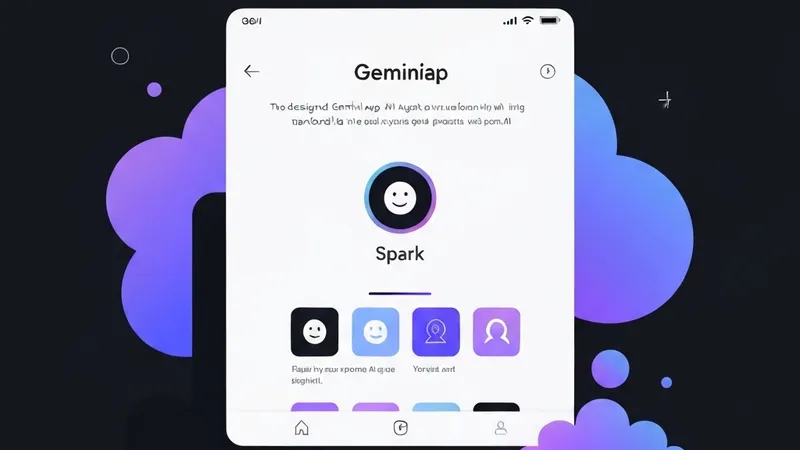
To achieve this, Google rebuilt the app from the ground up with a new design language called "Neural Expressive," featuring fluid animations, vibrant colors, new typography, and haptic feedback. Gemini’s responses are no longer presented as a "wall of text" typical of most chatbots. Instead, key information is highlighted in bold at the top, while additional texts, images, and timelines appear progressively as the user scrolls down.
As for Gemini Spark, Google describes it as a 24/7 personal AI agent that helps navigate your digital life, transforming Gemini from a passive assistant into an active partner. Since Spark is cloud-based, it continues working in the background even when the user's phone is locked. Users will be able to create their own custom workflows within the Gemini app. Currently in testing, Google expects to roll out Spark to Google AI Ultra subscribers next week.
The company also unveiled Gemini Omni, a new AI video model that combines Gemini with Google’s generative media models to create grounded, high-quality video outputs from multimodal inputs (audio, images, and video). For example, a user can prompt it for a "claymation explainer of protein folding." The model is rolling out to Google Flow and YouTube Shorts for Google AI subscribers, intensifying competition in multimodal generation.
[AgentUpdate Depth Analysis] The introduction of Gemini Spark marks a pivotal paradigm shift in consumer AI Agents: transitioning from "active chat-based interfaces" to "passive, background-running asynchronous execution." By operating on a cloud-based framework that persists even when devices are locked, Spark fulfills the core promise of an "always-on" digital twin. Compared to Claude's interactive desktop-automation or ChatGPT's prompt-response model, Google's strategy leverages its native integration with Android and Workspace. This ecosystem dominance allows Spark to bypass permission walls that stymie third-party Agent developers. Moving forward, the true battleground will not be the model's raw intelligence, but its contextual integration. Google's move poses an existential challenge to middleware Agent platforms, forcing developers to pivot from building generic automation pipelines to securing proprietary, domain-specific data silos that OS-level agents cannot easily access.