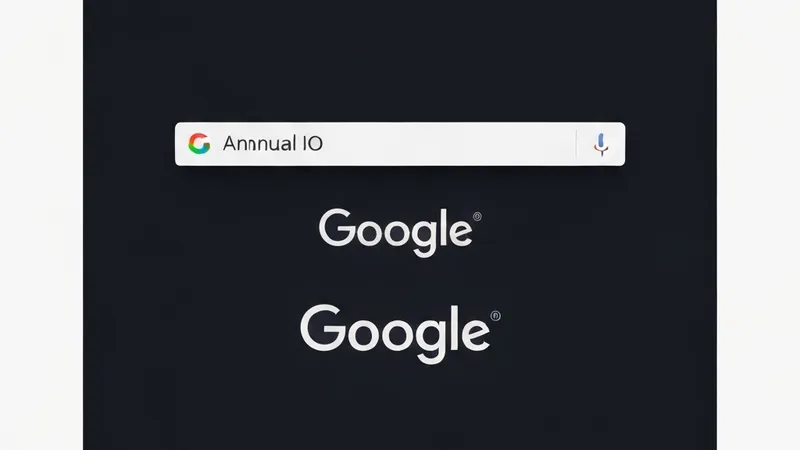
For a quarter century, the Google search box has been one of the most recognizable interfaces in computing: a thin white rectangle, a blinking cursor, a few typed words, and a list of blue links. On Tuesday, Google formally retired that paradigm.
At its annual I/O 2026 developer conference, Google announced a sweeping redesign of the search box itself—the literal text field where billions of queries begin every day—transforming it from a simple keyword input into a dynamic, AI-driven conversation starter that can accept text, images, PDFs, videos, and even open Chrome tabs as inputs. The company is also merging its AI Overviews and AI Mode features into a single, seamless search flow, eliminating the friction that previously forced users to choose between a traditional results page and an AI-forward experience.
Liz Reid, Google's vice president and head of Search, called it "the biggest upgrade to our iconic search box since its debut over 25 years ago" during a press briefing on Monday.
The announcement arrived alongside a blizzard of other news—including new Gemini 3.5 models, a personal AI agent called Spark, an intelligent shopping cart, and a reimagined developer platform—but the search box redesign may prove to be the most consequential. It is the clearest signal yet that Google views the future of its flagship product not as a place where users type fragmented keywords, but as an interface where they hold open-ended, multimodal conversations with an AI system backed by the entire web.
The new search box expands, accepts files, and coaches users on what to ask. These changes demonstrate a fundamental shift in how Google expects people to interact with information, guiding them away from fragmented queries toward rich, contextual, and continuous dialogues with AI.
[AgentUpdate Depth Analysis] Google's redesign of the search box represents a paradigm shift from a simple information retriever to an active "agentic portal". By allowing multimodal contexts like PDFs, active Chrome tabs, and video inputs, Google is effectively transforming the search box into the ultimate command line for its upcoming Spark AI agent. Compared to modular agent ecosystems built on tools like LangChain or MCP (Model Context Protocol), Google's approach leverages its massive OS and browser footprint to establish a native, zero-friction context window. This sets a new benchmark for the AI Agent ecosystem, demonstrating that the future of agentic workflows lies not in standalone apps, but in the ubiquitous, contextual conversion of existing daily user interfaces into dynamic action engines.