While the measurable business benefits of implementing artificial intelligence remain a subject of active debate across many industries, there is one sector reaping massive productivity gains: cybercrime. Cybercriminals are now more successful than ever at leveraging newly disclosed vulnerabilities to attack businesses in their most vulnerable environment—the cloud.
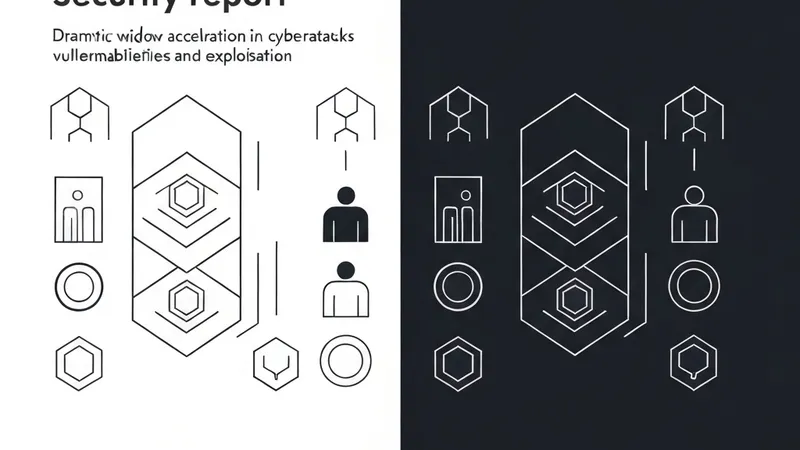
This is the core finding of the March 2026 Cloud Threat Horizons Report released by Google's team of security investigators and engineers. Based on threat intelligence gathered in the second half of 2025, Google Cloud Security concluded: "The window between vulnerability disclosure and mass exploitation collapsed by an order of magnitude, from weeks to days." To counter these AI-powered attacks, the report emphasizes that organizations must urgently pivot to automatic, AI-augmented defenses.
The report notes that modern security threats rarely target the core infrastructure of major cloud service providers like Google Cloud, AWS, or Microsoft Azure, which remain highly secured. Instead, threat actors—ranging from criminal syndicates to state-sponsored groups, notably from North Korea—are aggressively exploiting unpatched vulnerabilities in third-party code. The report highlights several critical incidents:
One notable case involved a critical Remote Code Execution (RCE) vulnerability in React Server Components (CVE-2025-55182, commonly known as React2Shell), a popular JavaScript library. Exploitation of this vulnerability began within 48 hours of its public disclosure. Another incident involved an RCE vulnerability in the popular XWiki Platform (CVE-2025-24893). Although a patch was released in June 2024, widespread negligence in patch deployment allowed attackers, including crypto-mining gangs, to launch massive exploits in November 2025. Additionally, the report details how UNC4899, a state-sponsored threat group likely originating from North Korea, hijacked Kubernetes workloads to siphon millions of dollars in cryptocurrency.
[AgentUpdate Depth Analysis] The dramatic collapse of the vulnerability-to-exploitation window signals a paradigm shift where traditional human-in-the-loop security is no longer viable. To survive this AI-accelerated threat landscape, the industry must pivot toward "Agentic Security"—deploying autonomous AI security agents capable of real-time threat detection, automated patch synthesis, and dynamic micro-segmentation. Unlike static automated scripts, these security agents can contextually analyze third-party code dependencies and autonomously secure Kubernetes workloads before human operators can even diagnose the breach. For the broader AI Agent ecosystem, agentic defense represents both a critical commercial use case and an essential infrastructure layer, ensuring that future decentralized software environments can self-heal in the face of machine-speed adversaries.