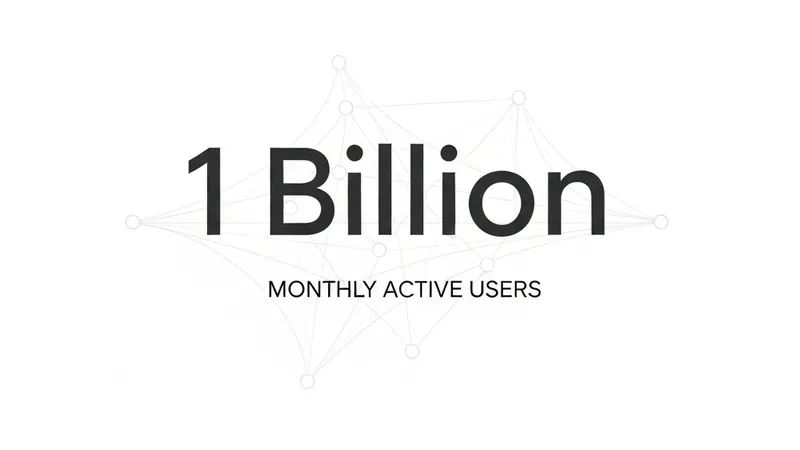
One year ago, Google launched AI Mode in the United States. Today, it has officially surpassed one billion monthly active users globally, with AI Mode queries more than doubling every quarter since its debut. These new generative AI features have propelled overall Search queries to an all-time high, bridging the gap between traditional retrieval and conversational AI.
Data from the U.S. market reveals that AI Mode is fundamentally expanding the definition of what is searchable. Instead of typing fragmented keywords, users are engaging in highly natural, intent-rich behaviors. Key insights from the past year include:
First, search has gone beyond text, with more than one in six U.S. queries now utilizing voice or images, and image searches growing over 40% month-over-month. Second, queries are becoming significantly longer; the average AI Mode search is now three times the length of a traditional Search query. Finally, users are leveraging AI for proactive planning and decision-making. Over the past six months, planning-related queries in AI Mode grew 80% faster than overall queries, while brainstorming queries outpaced the average by 30%, driven by phrases like "where to," "where should I," and "ideas for."
[AgentUpdate Depth Analysis] The rapid adoption of Google's AI Mode highlights a profound shift from simple keyword-based indexing to complex, intent-driven semantic understanding. While startups like Perplexity and OpenAI's SearchGPT are targeting niche power users, Google's ability to scale conversational search to over a billion users signals the mainstreaming of AI-mediated information processing. The threefold increase in query length and the surge in planning tasks demonstrate that users are treating the search bar as a collaborative canvas rather than a directory. This transition is a crucial prerequisite for the AI Agent ecosystem. As searches evolve from static informational queries into multi-step planning and orchestration, the Search interface acts as the ultimate intent-capture layer. The downstream impact is significant: future AI Agents will leverage these highly contextualized, multimodal search behaviors to execute complex workflows, shifting the tech landscape from "search and find" to "plan and execute."