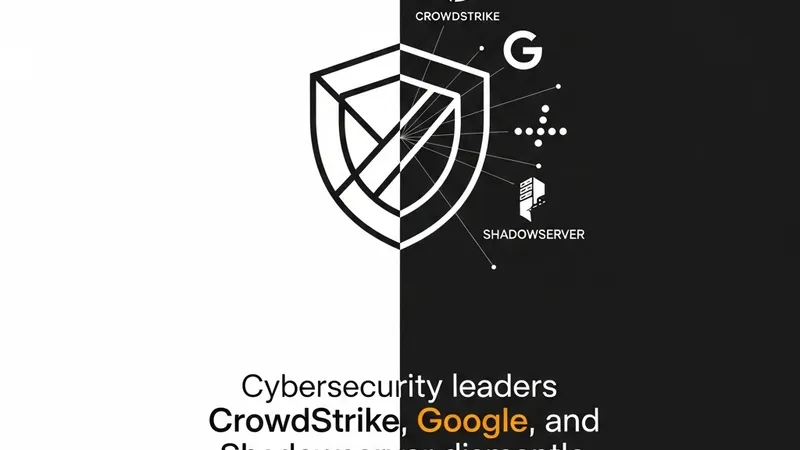
Cybersecurity firm CrowdStrike, in collaboration with Google and the nonprofit organization Shadowserver, has successfully dismantled a botnet dubbed "Glassworm." This botnet was utilized by cybercriminals to distribute malware and steal passwords from open-source software developers.
According to CrowdStrike, the takedown operation aimed to disrupt the activities of the cybercriminals behind the "Glassworm" botnet, who have been targeting the broader open-source software supply chain for two years.
In recent months, several hacking groups have targeted developers and open-source projects to push malicious software to companies and organizations that use those applications. These attacks are effective because they exploit the trust companies place in code hosted on platforms like GitHub and in the developers behind that code.
“Adversaries are no longer just targeting products; they’re targeting the developers who build them,” CrowdStrike stated in its report on the takedown. “Developers represent uniquely high-value targets: compromising a single developer’s workstation can cascade into a supply-chain compromise that impacts thousands of downstream organizations and users.”
The Glassworm hackers employed several strategies to spread their malicious code. These included publishing malicious extensions on a marketplace used by developers; malvertising, where hackers pay for sponsored search results to trick victims into downloading malware; and using credentials stolen in previous hacks to hijack developer accounts and plant malware in their code.
Ultimately, the hackers were able to—as CrowdStrike put it—"poison" more than 300 GitHub code repositories.
CrowdStrike reported that it successfully neutralized four command-and-control (C2) channels used by the Glassworm hackers, severing their access to infected computers and preventing further malware delivery.
These command-and-control servers relied on technologies such as the Solana blockchain, the BitTorrent peer-to-peer network, Google Calendar, and virtual private servers, according to CrowdStrike. It remains unclear under what specific legal or technical authority CrowdStrike and its partners operated during this takedown. When questioned by TechCrunch, CrowdStrike spokesperson Kirsten Speas declined to elaborate beyond the company's blog post.
Last week, hackers compromised several open-source projects, pushing out malicious updates in a separate campaign named “Mini Shai-Hulud,” which affected at least two OpenAI developers. In another supply chain attack in March, a suspected North Korean hacker hijacked a popular open-source software development project.
[AgentUpdate Depth Analysis]
The Glassworm botnet's targeting of open-source developers highlights a critical vulnerability within the software supply chain that has profound implications for the nascent AI Agent ecosystem. AI agents heavily rely on open-source frameworks (e.g., LangChain, LlamaIndex), pre-trained models, and various tool APIs. A compromise at the foundational component level—or of the developers maintaining them—could inject malicious code directly into an agent's core logic, data processing pipelines, or even its decision-making models. This could lead to erratic agent behavior, data exfiltration, hijacked task execution, or even transform the agent itself into a vector for further attacks. Unlike traditional software, the black-box nature and autonomous capabilities of AI agents make such compromises harder to detect and trace, escalating potential damage. Ensuring the integrity and security of the open-source ecosystem that AI agents depend on will be paramount. This necessitates robust supply chain security audits, the adoption of 'shift-left' security practices in AI development, and potentially leveraging AI agents themselves for real-time threat detection and anomaly analysis to safeguard the integrity of the broader AI agent ecosystem.