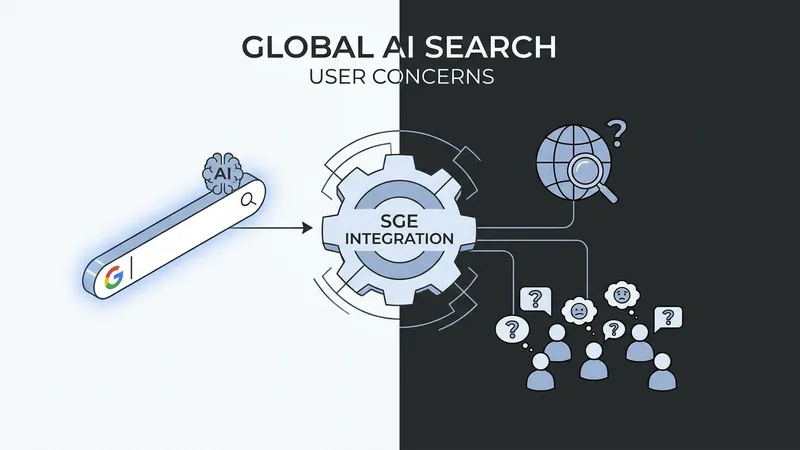
Google's ambitious integration of generative AI into its core search experience, often referred to as Search Generative Experience (SGE), has sparked a significant shift in the digital landscape. While Google aims to provide more direct answers and conversational interactions, this move has not been universally embraced. Many users have expressed concerns about the potential for AI-generated summaries to overshadow traditional web results, impacting content creators and the diversity of information. Furthermore, the inherent data processing required for sophisticated AI models has rekindled widespread discussions about user privacy and data security in the context of major tech platforms.
Amidst these changes, privacy-focused search engine DuckDuckGo has reportedly seen a notable surge in its application popularity. Data from various analytics firms suggests a steady increase in downloads and active users for the DuckDuckGo app, particularly following Google's public rollout of SGE features. This growth is largely attributed to users seeking alternatives that prioritize privacy and offer a more conventional search experience, free from personalized tracking and AI-driven content manipulation.
DuckDuckGo's value proposition is built around its commitment to not track user searches, IP addresses, or personal information. Its "Privacy Browser" combines a search engine with a secure browser, offering features like tracker blocking and encryption. This strong stance on user privacy resonates with a segment of the internet population increasingly wary of how their online activities are monitored and monetized by larger corporations. The shift by Google towards AI-centric search, perceived by some as further complicating the user experience and data privacy landscape, has inadvertently driven more users towards DuckDuckGo's straightforward and privacy-respecting model.
Industry observers note that this trend highlights a growing bifurcation in user preferences: some users embrace the convenience and advanced capabilities of AI-powered search, while others explicitly opt for simpler, more private, and less algorithmically-influenced alternatives. The competitive dynamics in the search engine market are evolving, with privacy emerging as a key differentiator alongside search relevance and feature sets. As AI becomes more pervasive in digital services, the demand for privacy-centric tools like DuckDuckGo is likely to continue its upward trajectory.
[AgentUpdate Depth Analysis] Google's push for AI-integrated search, while technologically advanced, amplifies critical discussions around user privacy and algorithmic influence on information discovery. For the AI Agent ecosystem, this has profound implications. AI Agents naturally require vast amounts of data for learning and decision-making, yet DuckDuckGo's growth underscores acute user sensitivity to data privacy. Agent developers must balance powerful functionality with robust privacy protection, potentially leveraging techniques like federated learning or differential privacy. Furthermore, as AI Agents become primary interfaces for information retrieval, their over-reliance on a single AI search provider could exacerbate filter bubbles and biases. DuckDuckGo's rise suggests Agents should be capable of accessing diverse information sources, perhaps incorporating user preferences for decentralized or privacy-enhancing search tools. This is crucial for building a healthy, transparent, and user-centric AI Agent ecosystem. Agents should not become new gatekeepers of information but rather reliable assistants empowering users with control over their data and information flow. Future Agent competition will extend beyond features to encompass respect for user privacy and autonomy.