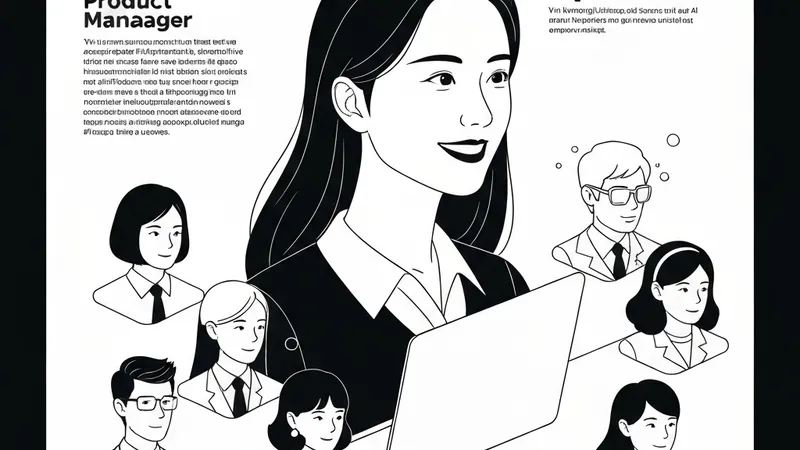
A Chinese AI product manager shared her experience of creating six AI employees to significantly boost her productivity. Vivi Mengjie Xiao reported that while her output soared, so did her exhaustion. The content creator also suggested that the future of work might increasingly resemble 'one-person companies.'
This 'as-told-to' essay is based on a conversation with Vivi Mengjie Xiao, who works as an AI product manager and is also a prominent content creator on RedNote, China's social media platform. The conversation has been edited for length and clarity.
As an AI product manager in China, I was tasked by my CEO earlier this year to explore how AI could drive innovation beyond mere cost-cutting. Outside of my corporate role, I am a content creator on RedNote, where I share AI tools, workflows, and insights with over 45,000 followers. I used to spend approximately four hours daily gathering AI industry news, which involved reading posts on X (formerly Twitter), newsletters, blog posts, and translating English sources into Chinese. This led me to question: 'Can I automate this?' If AI can handle information gathering, what other tasks can it perform? My principle became: if a task is repetitive, it should be automated. Consequently, I developed six AI employees, each designed to address a specific problem I encountered, splitting their duties between my professional and personal life.
My initial venture into OpenClaw began by setting up just one 'lobster'—a popular nickname among Chinese netizens for deploying an OpenClaw agent—and attempting to have it manage everything. I intended for it to oversee my calendar, schedule, to-do list, and monitor my work. Prone to distractions, I sought its assistance in maintaining focus.