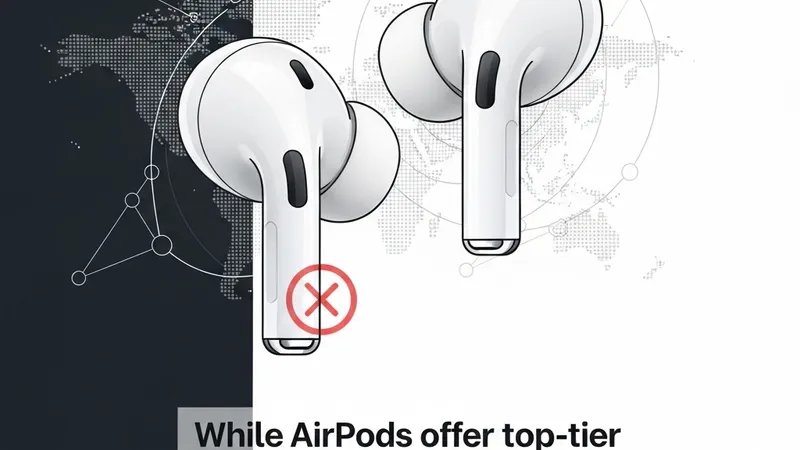
AirPods remain one of the premier options for personal audio, offering great sound quality and a feature-rich experience. In fact, they have begun absorbing tasks that previously required a screened device, often staying in users' ears throughout the entire day. However, this growing complexity demands more granular controls and clear data displays, areas where current AirPods settings fall short.
According to a new report from Bloomberg’s Mark Gurman, Apple is addressing these user pain points. Gurman reports that with the release of iOS 27 (alongside corresponding iPadOS and macOS updates), Apple plans to "revamp the AirPods settings menu to be more functional." Crucially, AirPods will not receive a dedicated standalone app like the Apple Watch. While specific details remain under wraps, users have long clamored for a straightforward way to trigger firmware updates manually—moving away from the current "wait and pray" mechanism—and a more consistent, visible battery status display.
Gurman also notes that the updated software will "better highlight major feature options," making it easier for users to navigate the increasingly complex capabilities of their earbuds.
[AgentUpdate Depth Analysis] The revamp of AirPods controls signals a broader shift in the AI Agent ecosystem toward ambient computing. As AI Agents transition from chat interfaces to proactive, multi-modal helpers, audio-first wearables like AirPods are becoming the ultimate human-agent interface. While dedicated AI hardware like the Humane AI Pin struggled due to friction, Apple’s strategy of supercharging existing, highly-adopted accessories is far more pragmatic. By streamlining controls and firmware management, Apple is fortifying AirPods as a reliable, low-latency gateway for on-device AI Agents (such as an upgraded, agentic Siri). In the long run, AirPods will evolve from passive audio receivers into active perceptual nodes, capturing user intent in real-time and delivering context-aware assistance, setting a benchmark for the future of voice-driven AI interaction.