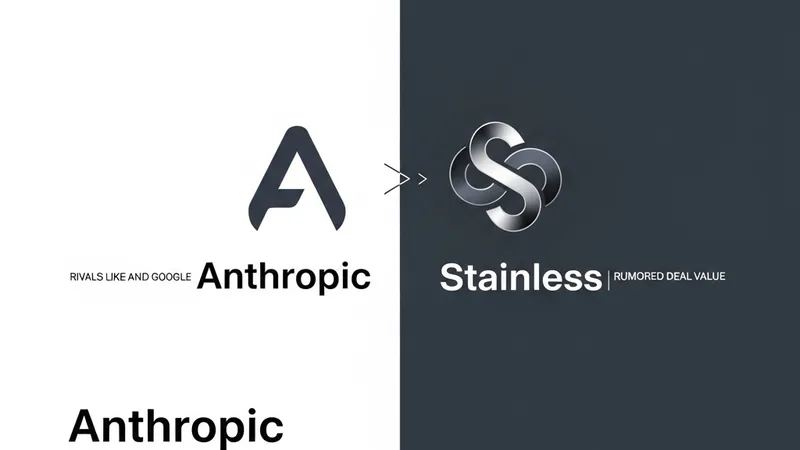
Anthropic announced on Monday its acquisition of Stainless, a developer-tools startup founded by former Stripe engineer Alex Rattray. The startup's software has become a cornerstone of the emerging AI infrastructure, serving high-profile clients including OpenAI, Google, and Cloudflare.
While the financial terms were not officially disclosed, previous reports from The Information indicated that the deal valued the Sequoia and a16z-backed startup at over $300 million. This acquisition effectively secures a vital piece of the development pipeline for Anthropic while removing it from the open market.
The strategic impact is immediate. Anthropic informed TechCrunch that it plans to wind down all hosted Stainless products, including its proprietary SDK generator. While existing customers will retain ownership and modification rights over the SDKs they have already generated, the platform's advanced automation tools will no longer be available to Anthropic's rivals.
Since its founding in 2022, Stainless has specialized in automating the creation and maintenance of Software Development Kits (SDKs). By taking API specifications and converting them into production-ready SDKs across languages like Python, TypeScript, Kotlin, Go, and Java, Stainless eliminated the labor-intensive task of manual library maintenance. This automation ensures that SDKs stay synchronized with API updates seamlessly.
For companies developing AI agents—such as Replicate, Runway, and Google—this technology is critical. AI agents rely on robust connections to external software to execute tasks, and Stainless provided the most efficient way to scale those integrations. Anthropic confirmed that Stainless has been behind every official Anthropic SDK since the earliest days of its API program.
“I started Stainless because SDKs deserve as much care as the APIs they wrap,” said founder Alex Rattray. He noted that the decision to join forces with Anthropic was driven by a shared vision for developer experience and the opportunity to scale their impact within the Claude ecosystem.