Recently, I lost a lot of time reviewing, and would have lost even more implementing, what I can only describe as vibe-written specs. These are requirements that feel coherent while saying almost nothing concrete—the kind of document where every paragraph sounds reasonable until you scratch the surface and realize the thing is not applicable in the existing ecosystem.
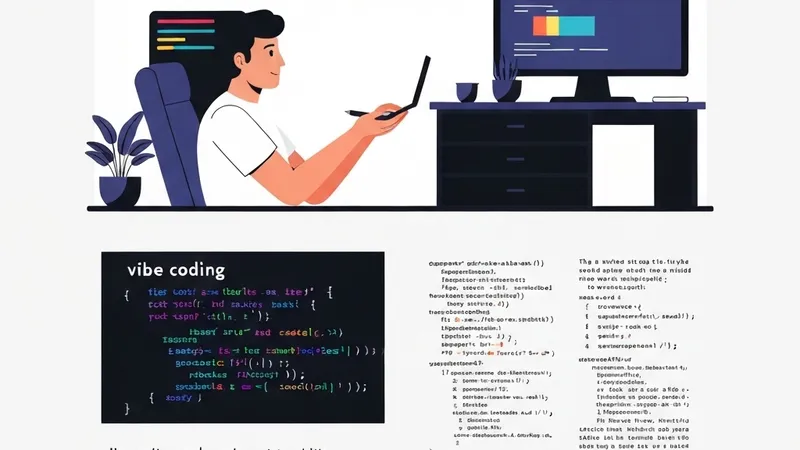
To be clear: I am not against vibe coding. I use it myself all the time. If I need a one-off script, a throwaway visualization, a temporary parser, or a document nobody else will maintain, speed matters much more than rigor. But maintenance changes the equation completely.
This weekend accidentally gave me a good example of where vibe coding actually shines. During my usual Saturday clean-up, I knocked over a wooden cube puzzle: 25 identical pentacubes that are supposed to fill a perfect 5×5×5 cube. I tried reconstructing it manually for a while and failed (blaming the fact that I was tired and Europe was suffering under a heat dome). Needless to say, this really bugged the engineer in me, and by Sunday morning I was ready to throw AI at this. I realized the rules are precise, the state space is finite, the problem is absolutely solvable, and computers are very good at brute force.
So I opened Go and started vibe coding. The single piece shape is simple: a planar pentacube of which there are 25 instances. At first, the challenge was not the algorithm itself, but the representation or the domain-specific language (DSL). Even explaining the puzzle to ChatGPT took multiple iterations. We had to establish coordinate conventions, slice notation, legal piece states, rotation semantics, and eventually a labeling system for pieces.
Once the model stabilized, the rest followed naturally: generate transformations, normalize orientations, recursively place pieces, and backtrack on collision. Classic brute force. I fully expected to need serious optimizations eventually—such as pruning, bitboards, placement precomputation, or maybe even Algorithm X. However, modern hardware is absurdly efficient. The naive recursive solver found solutions fast enough that optimization stopped being necessary and became an optional engineering curiosity instead.
[AgentUpdate Depth Analysis] The rise of 'Vibe Coding' signals a fundamental paradigm shift where developers transition from syntax writers to intent architects. In the evolving AI Agent ecosystem, tools like Devin and Cursor thrive in this space by compressing the 'feedback-loop' of code-generation. For short-lived, single-use, or well-bounded problems, vibe coding bypasses traditional engineering overhead, relying instead on the Agent’s rapid prototyping capabilities. Crucially, this challenges our definition of software quality: when code is cheap and ephemeral, adaptability and execution speed trump maintainability. Looking ahead, the AI Agent market will likely bifurcate: highly structured enterprise applications will still demand deterministic MCPs and rigorous control, while a massive tail of transient computing needs will be fully automated via vibe-coding agents, democratizing custom software on-demand.