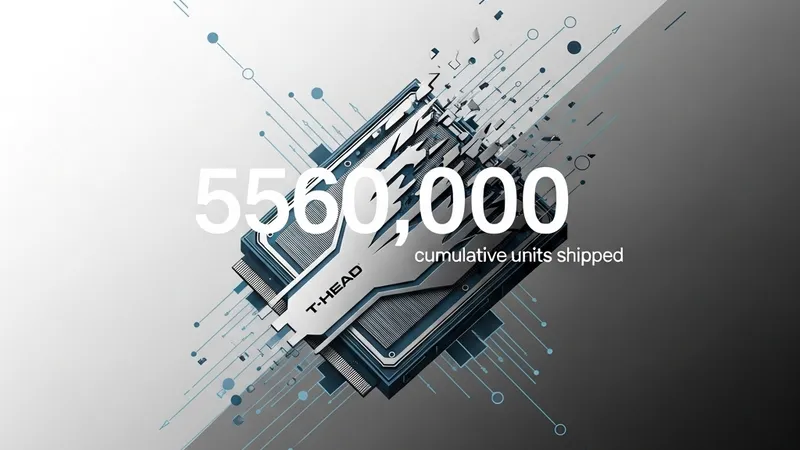
At the 2026 Alibaba Cloud Summit, T-Head (Alibaba's chip division) unveiled its roadmap for the "Zhenwu" GPU series. To address the surging compute demands of the "Agentic Era" across various industries, T-Head will launch two next-generation chips, Zhenwu V900 and Zhenwu J900, over the next two years. Currently, the Zhenwu series has accumulated over 560,000 unit shipments, serving more than 400 clients across 20+ industries, including China Telecom, FAW Group, and Shanghai Pudong Development Bank (SPDB).
Simultaneously, Alibaba's application ecosystem is witnessing rapid Agent-driven disruption. On May 20, travel platform Fliggy launched a free AI-powered smart assistant for hotel merchants. This assistant enables hoteliers to manage room availability, update inventory, and process invoices using simple natural language commands. It also provides real-time data analysis to suggest pricing strategies and pinpoint critical touchpoints during the guest journey to optimize service quality and reputation.
[AgentUpdate Depth Analysis] The milestone shipment of T-Head's Zhenwu series and its Agent-centric roadmap signal a crucial paradigm shift in AI infrastructure. Standard LLM chips are optimized for raw throughput of single-prompt queries. However, the Agentic Era demands continuous, long-running agent loops characterized by high-frequency tool use and multi-agent coordination. This shift requires silicon optimized for extreme energy efficiency and heterogeneous concurrency. By targeting this niche, T-Head is positioning itself as a key enabler for localized, cost-effective Agent runtimes. Fliggy's deployment of hotel agents is a direct manifestation of this hardware-democratized software layer. In the long run, competitive advantage will belong to platforms that can achieve deep vertical integration across custom silicon, agent orchestration engines, and domain-specific applications.