Spotify is expanding its platform's capabilities by introducing personal podcast features, allowing users to leverage AI to generate audio content based on custom prompts or specific ideas. This move transitions Spotify from a consumption-only hub to a generative content creator.
Following the release of a GitHub-based command-line tool for Claude Code and Codex, Spotify confirmed that users will soon be able to create podcasts directly within the app. The platform will support scheduled daily or weekly briefings for recurring interests, as well as one-off podcasts for rapid learning. For instance, users can request local concert updates or a five-minute summary of complex topics like economics.
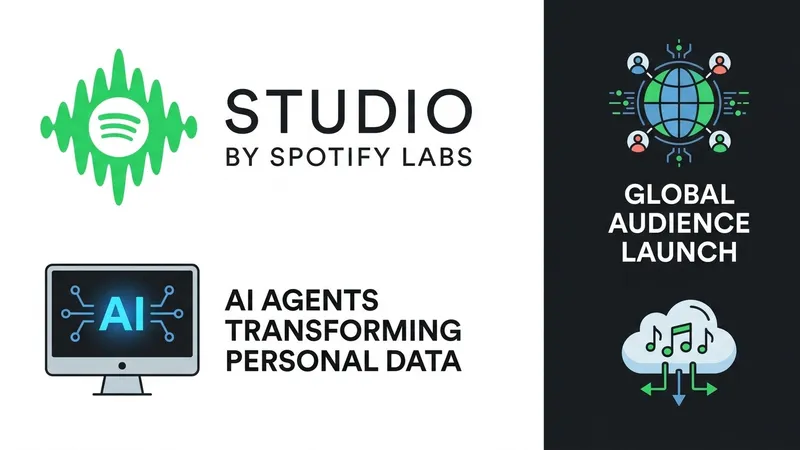
The system allows for rich input sources, including links, PDFs, and raw text, paired with custom voice selection. This approach mirrors technologies found in Google's NotebookLM and ElevenLabs. To further integrate into professional workflows, Spotify launched a desktop app called "Studio by Spotify Labs," which syncs with email and calendar data to generate personalized daily briefings.
Spotify is also enhancing the listening experience with an AI-powered Q&A feature for Premium mobile users in the U.S., Sweden, and Ireland. Listeners can now ask questions about specific episodes or concepts mentioned in a podcast, similar to the "Ask YouTube" functionality recently introduced by Google. As video podcast consumption has grown 50% year-on-year, these AI tools are designed to maximize user engagement.
On the creator side, Spotify is making its sponsorship management tools more accessible and introducing a subscription model for exclusive content. These features align Spotify with social platforms like Instagram and Facebook, providing creators with robust monetization pathways within the podcast ecosystem.