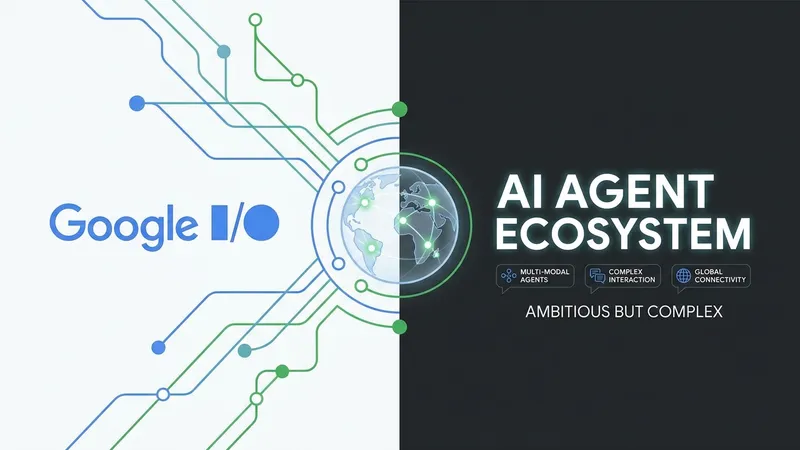
At Google’s I/O developer conference on Tuesday, the company introduced a transformative way for consumers to interact with the web: AI agents. While promising, the rollout unveiled a complex ecosystem of specialized assistants with various branding and entry points.
Google debuted "Information Agents," a complete reinvention of the legacy Google Alerts service, now powered by AI. These agents are designed to operate autonomously in the background 24/7, keeping users updated on specific interests such as market fluctuations, price drops, or emergency weather alerts.
The centerpiece of the personal agent strategy is Gemini Spark. Deeply integrated with Google Workspace products like Gmail and Google Docs, Spark aims to navigate the user's digital life. Google claims the assistant can handle diverse tasks ranging from surfacing key themes in newsletters to organizing home inventories and managing complex logistics for group trips.
To manage notifications from Spark, Google introduced "Android Halo." This distinct branding for an Android feature suggests internal product competition, though it adds another layer to the user experience. Additionally, the Gemini app is gaining an agent capable of compiling data from Gmail, Calendar, and Tasks into a personalized update known as "Daily Brief."
Availability is currently restricted to premium tiers. Google is targeting its "AI-pilled" power users who subscribe to the $100-per-month Google Ultra plan. Information agents will launch for Pro and Ultra subscribers in the U.S. this summer, while Spark is slated for Ultra subscribers "soon." Android Halo is expected later this year, and Daily Brief is currently rolling out to Ultra, Pro, and Plus tiers.
Google also previewed "agentic" capabilities for the Chrome browser. A demo showcased a user configuring car options and trim levels through natural language conversation with the browser, bypassing traditional menus and clicks. While the plethora of AI entry points might seem overwhelming, Google intends to bring these features to free users "when the time is right," focusing first on iterating with power users who push the limits of what Spark and autonomous agents can achieve.