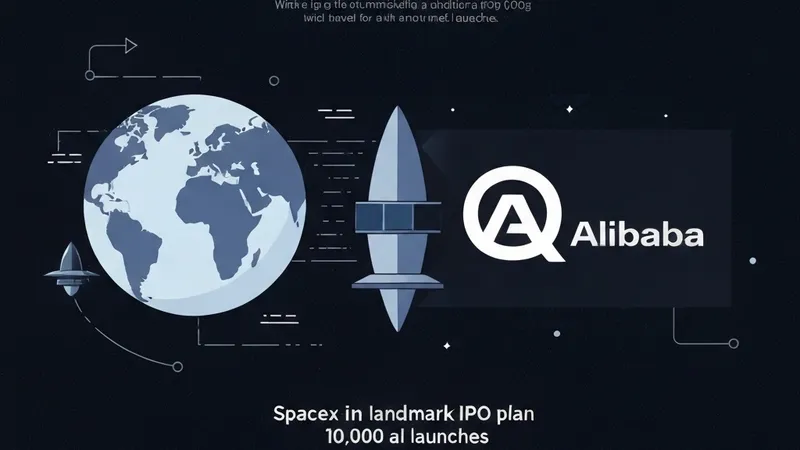
SpaceX is pushing an ambitious expansion strategy, aiming to achieve 10,000 launches per year within five years, according to the FAA. While regulators demand higher reliability, SpaceX's vision includes a 1-million-satellite constellation designed to power AI data centers via solar energy. Furthermore, the company has officially initiated the largest IPO plan in history. With a potential valuation of $1.75 trillion and a target to raise $750 billion, SpaceX is set to reshape the landscape of aerospace and AI investments on Wall Street.
In the LLM sector, Alibaba's Qwen 3.7-Max has achieved a major milestone. According to ArtificialAnalysis, the model scored 56.6, ranking 5th globally and 1st among Chinese models, rivaling the performance of GPT-4 and Claude 3. This flagship model will soon be available via Alibaba Cloud's Bai Lian platform. Simultaneously, Alibaba leadership confirmed that instant retail, powered by AI to drive user growth and monetization, has become a core strategic pillar for Taobao and Tmall.
Significant breakthroughs were also reported in hardware and robotics. AMD announced the mass production of its next-generation EPYC processor, codenamed "Venice," utilizing TSMC's 2nm process—the industry's first 2nm product for High-Performance Computing (HPC). Meanwhile, Tesla has retired the production of Model S/X at its Fremont factory. These legendary assembly lines are being retooled into dedicated facilities for humanoid robots with a planned annual capacity of 1 million units, signaling Tesla's strategic pivot toward mass robotics manufacturing.