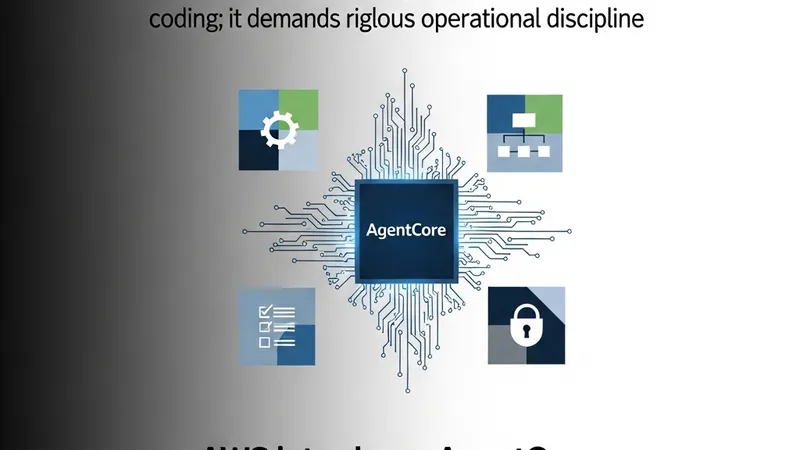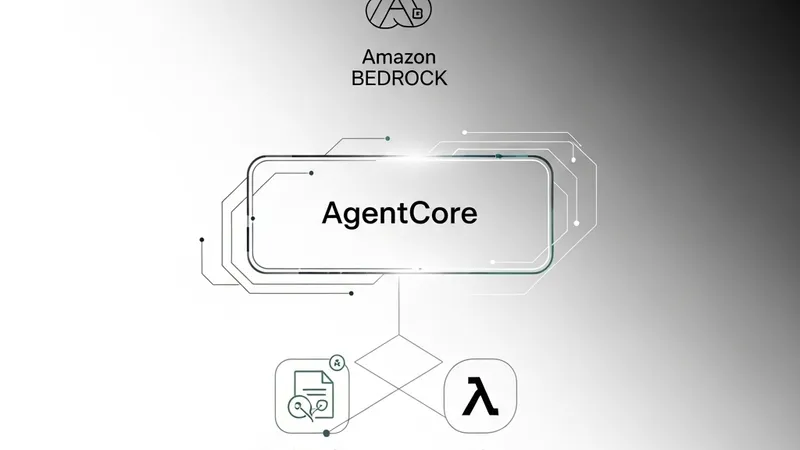
As enterprises scale AI agent deployments for workflow automation, managing secure access to thousands of tools becomes a critical governance challenge. Unlike traditional applications with fixed logic, LLM-powered agents determine tool calls, arguments, and sequences at runtime, making pre-auditing call graphs nearly impossible. Amazon Bedrock addresses this with the AgentCore gateway, providing a two-layered security architecture.
The first mechanism, Amazon Bedrock AgentCore Policy, leverages the Cedar declarative policy language. It allows developers to define access control based on principals, actions, and resources. Every request is evaluated deterministically, resulting in an explicit allow or deny decision, with all activities automatically recorded in audit logs to meet enterprise compliance standards.
The second mechanism, Lambda Interceptors, enables custom logic execution before or after each tool call. This is essential for dynamic validation, payload enrichment, token exchange, and response filtering. By combining deterministic policies with dynamic interception, organizations can implement layered security architectures that adapt to the unpredictable nature of autonomous agents.
The provided lakehouse data agent example illustrates how to enforce geography-based access control by layering these mechanisms. It authenticates users via Amazon Cognito and ensures that roles—such as policyholders, adjusters, and admins—operate within their specific security boundaries, ensuring data privacy even in complex agentic workflows.
[AgentUpdate Depth Analysis] As agents evolve from simple scripts into sophisticated, multi-agent orchestrations, traditional identity management is no longer sufficient to govern dynamic reasoning paths. Amazon Bedrock AgentCore’s value proposition lies in decoupling security governance from the agent application layer to the gateway level—a shift that marks a major evolution in infrastructure-level AI security. The integration of the Cedar policy language is particularly pivotal; it enables semantic-level access control rather than simple routing-based authorization. This hybrid approach of 'deterministic policy plus dynamic execution hooks' acts as a specialized 'guardrail' for the LLM inference loop. When benchmarked against emerging standards like MCP, this architecture provides a robust blueprint for preventing unauthorized tool use or hallucination-induced security breaches. Looking forward, this gateway-centric security model is set to become the enterprise standard for AI Agent deployment, effectively removing the 'trust gap' that currently hinders the broad adoption of autonomous agentic systems in production environments.