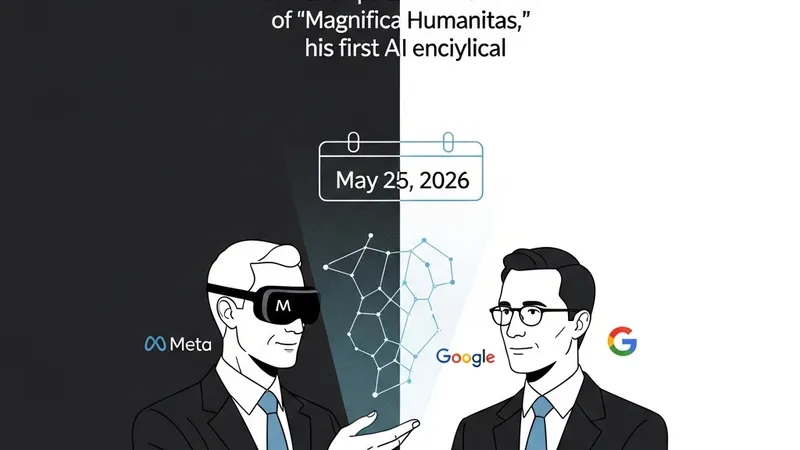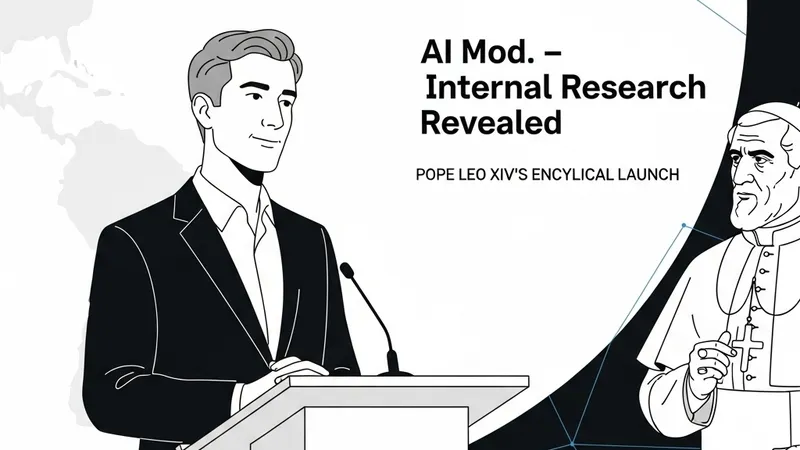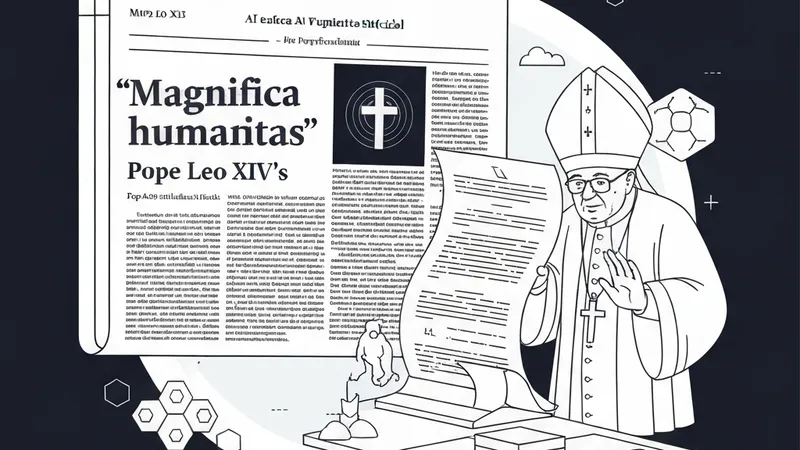
On May 25, 2026, a landmark moment unfolded as Pope Leo XIV presented his first encyclical on Artificial Intelligence, titled "Magnifica humanitas" (The Grandeur of Humanity). This extensive document, spanning approximately 43,000 words, calls for global AI regulation, specifically emphasizing the protection of children from hypersexualized AI images. The Pope urged governments worldwide to slow down AI development and unequivocally decried "new forms of slavery" emerging within AI and technology supply chains.
Notably, this encyclical's release was preceded by a series of quiet lobbying efforts from major tech companies. According to Politico, executives from Meta, Google, and Amazon met with Vatican officials on April 29. Furthermore, The Washington Post reported that a section of the encyclical addressing AI's unpredictability suggests influence from Anthropic, whose co-founder, Christopher Olah, was present at the unveiling, underscoring the deep intertwining of technological development with ethical and societal considerations.
The encyclical elevates AI ethics to a religious imperative, reflecting growing global concern over the rapid advancements and societal implications of AI. Through this document, the Pope links AI development to human dignity, social justice, and international cooperation, providing a crucial framework for the global tech community, policymakers, and ethicists.
Concurrently, the pervasive influence of AI is manifesting in other societal sectors. The New York Times reported a surge in AI-generated "pro se" cases—lawsuits filed by self-represented litigants. While these AI tools are democratizing the legal system by making it more accessible, they are simultaneously consuming significant court resources, posing new challenges to the existing judicial framework.