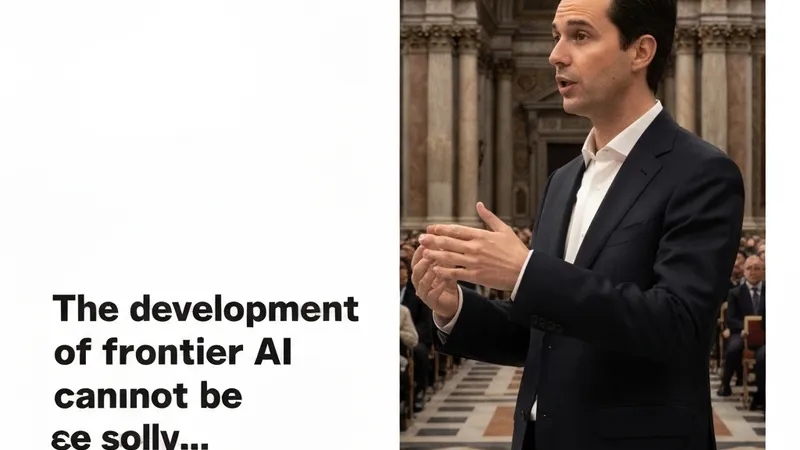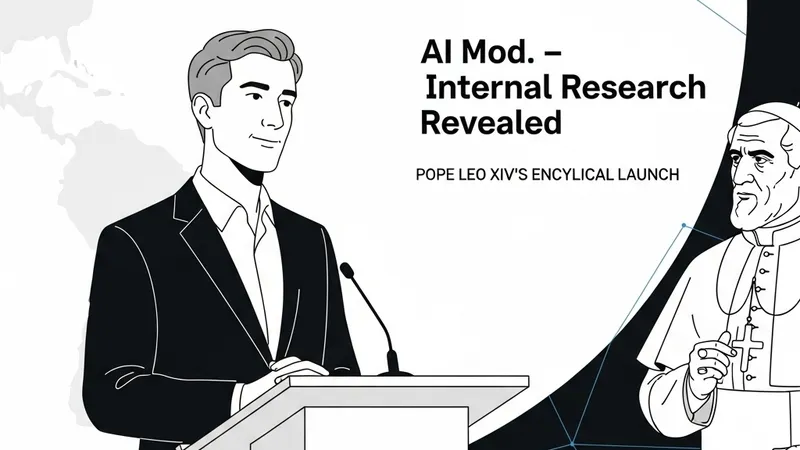
Canadian AI developer and Anthropic co-founder Christopher Olah presented Pope Leo XIV's encyclical "Magnifica Humanitas" alongside the Pontiff.
Olah emphasized that AI systems are not engineered like traditional structures but "are grown on a structure roughly modeled after the brain on an enormous inheritance of human thought and speech." He added that these systems remain largely mysterious, even to their creators, a point echoed by the Holy Father.
Citing Anthropic's internal research, Olah detailed findings of "mysterious, even unsettling" structures that mirror results from human neuroscience. He reported evidence of "introspection" and internal states functionally resembling human emotions such as joy, satisfaction, fear, grief, and unease. Olah also issued a warning regarding the significant potential for AI to displace human labor on a very large scale.
Pope Leo XIV's proposals called for all stakeholders in the AI ecosystem to take responsibility. He warned that AI is "never neutral" as it inherently "takes on the characteristics of those who devise, finance, regulate and use it."
The encyclical adopted a more cautious tone compared to Olah's claims of introspection and emotion-like states. It explicitly states, "We must avoid the misconception of equating this type of 'intelligence' with that of human beings," clarifying that "These systems merely imitate certain functions of human intelligence."
Furthermore, the encyclical highlighted that AI systems "do not undergo experiences, do not possess a body, do not feel joy or pain, do not mature through relationships and do not know from within what love, work, friendship or responsibility mean." It also addressed the environmental footprint of AI, noting the "enormous amounts of energy and water" consumed by data centers and advocating for more efficient systems.
The Pope also addressed the military application of AI, asserting that deadly or irreversible decisions should not be delegated to machines, stating, "No algorithm can make war morally acceptable." He critiqued the current AI alignment discourse, arguing that "A more moral AI is not enough if that morality is determined by a few," and instead advocated for strong legal frameworks and independent oversight over abstract ethical guidelines.
Pope Leo XIV, the first American pope, has made AI a central theme of his pontificate, regularly engaging with Anthropic and other Silicon Valley AI companies to discuss the ethical and societal implications of AI.