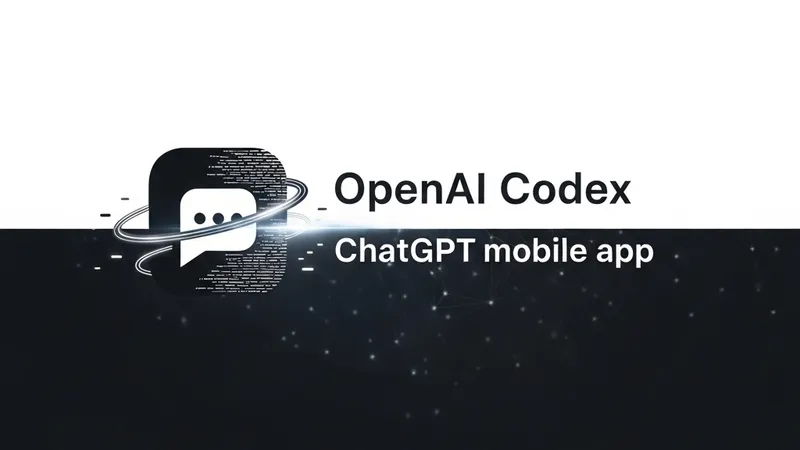
Codex is going mobile. The AI-powered coding tool—which OpenAI launched approximately a year ago—has now been officially integrated into the ChatGPT app, allowing developers to monitor and manage their development workflows remotely. The new capability, currently in preview, is available to all users across iOS and Android platforms.
The update enables users to view their live Codex environments on any device where it is running. "This is more than the ability to remotely control a single task or dispatch new tasks to your computer," OpenAI said in a statement. "From your phone, you can work across all of your threads, review outputs, approve commands, change models, or start something new."
This release follows a series of rapid updates. Last month, OpenAI enabled Codex to run autonomously in the background on desktop environments. Earlier this month, the company introduced a Chrome extension allowing the agent to operate within live browser sessions. The mobile integration represents the next logical step in Codex’s multi-device expansion.
The move intensifies the competition with rival Anthropic, which in February launched "Remote Control," a feature designed to let users monitor Claude Code's progress remotely. The flurry of feature releases highlights the fierce race between the two AI giants to establish their agentic coding tool as the industry standard for enterprises and developers alike.
[AgentUpdate Depth Analysis] The expansion of OpenAI's Codex to mobile devices, alongside Anthropic’s Claude Code "Remote Control," highlights a critical shift in the AI Agent ecosystem: the transition from static, IDE-bound coding assistants to ubiquitous, asynchronous digital workers. By placing the human-in-the-loop control interface onto mobile screens, OpenAI addresses a major bottleneck in autonomous agents—real-time oversight and safety approval. Developers no longer need to be tethered to desktops to ensure their agents aren't hallucinating or breaking builds. This multi-terminal orchestration paradigm, bridging browser, desktop background, and mobile apps, sets a new standard for developer-agent interaction, accelerating the adoption of truly autonomous AI workforce in enterprise environments.