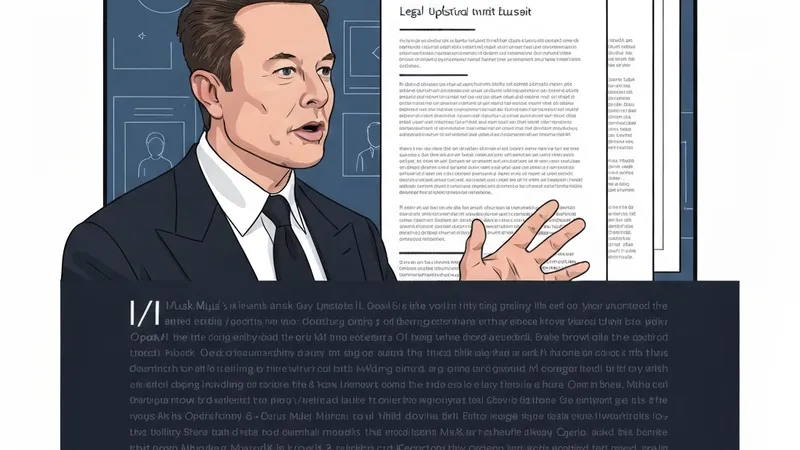
A judge previously stated that Musk's proposed "continuous accrual" theory was not legally sound, arguing it would allow charitable donors to sue indefinitely, thus the court would not instruct the jury on this point.
In his latest filing, Musk is attempting to counter this ruling, asserting that the late modification of remedies is intended to ensure the trial "remains focused" on "critical remedies."
The filing emphasizes that the remedies Musk seeks are directly aligned with his core motivation for the lawsuit: to prevent the public charity he co-founded and heavily supported in its early years from being subjugated by private, for-profit interests.
Musk continues to accuse Sam Altman, Greg Brockman, and other defendants of making false promises while soliciting "donations, labor, and public goodwill" under the solemn assurance that OpenAI would operate as a nonprofit for humanity's benefit.
Musk alleges their true objective was to transform these assets "into a wealth machine for themselves, Microsoft, and Silicon Valley insiders." This perspective is not unique to Musk; his lawsuit was referenced in a recent New Yorker investigation into Altman's trustworthiness.
To permanently dismantle Altman's alleged "wealth machine," Musk's lawsuit seeks to compel the return of profits to the charity, remove Altman from the board and company, and "unwind OpenAI's for-profit conversion and restructuring," ensuring OpenAI remains a perpetual nonprofit charity.
OpenAI Responds: Musk's Suit Remains "Baseless"
The impact of Musk's revised remedies on the jury's eventual ruling will soon be determined, with the trial anticipated to commence this month.
Musk's filing identifies OpenAI's alleged "breach of charitable trust, fraud, and unjust enrichment" as "at the heart of this case." However, for the extreme remedies he is seeking, his arguments appear somewhat tenuous and untested. To substantiate these remedies, Musk cites California law, which he claims "is clear that courts have broad equitable authority to remedy exactly this kind of misconduct." Nevertheless, his lawyer highlighted a section of the statute stating that "a plaintiff with standing may bring an action to ‘enjoin, correct, obtain damages for or to otherwise remedy a breach of a charitable trust.’" Ultimately, a jury will likely be tasked with interpreting this somewhat vague statute and deciding whether the return of ill-gotten gains, as calculated by Musk's expert, constitutes an appropriate remedy.