A new open-source toolkit from Microsoft focuses on runtime security to enforce strict governance on enterprise AI agents. This release addresses a growing concern: autonomous language models are now executing code and interacting with corporate networks at a pace that traditional policy controls cannot match.
Previously, AI integration typically involved conversational interfaces and advisory copilots, which had read-only access to specific datasets and kept humans firmly in the execution loop. However, organizations are now deploying agentic frameworks that take independent action, directly connecting these models to internal application programming interfaces (APIs), cloud storage repositories, and continuous integration (CI) pipelines.
When an autonomous agent can read an email, decide to write a script, and push that script to a server, stricter governance becomes vital. Traditional methods like static code analysis and pre-deployment vulnerability scanning are insufficient for the non-deterministic nature of large language models. A single prompt injection attack, or even a basic hallucination, could direct an agent to overwrite a database or exfiltrate customer records.
Microsoft’s new toolkit shifts focus to runtime security, offering a method to monitor, evaluate, and block actions precisely at the moment the model attempts to execute them. This approach surpasses reliance on prior training or static parameter checks.
Intercepting the Tool-Calling Layer in Real Time
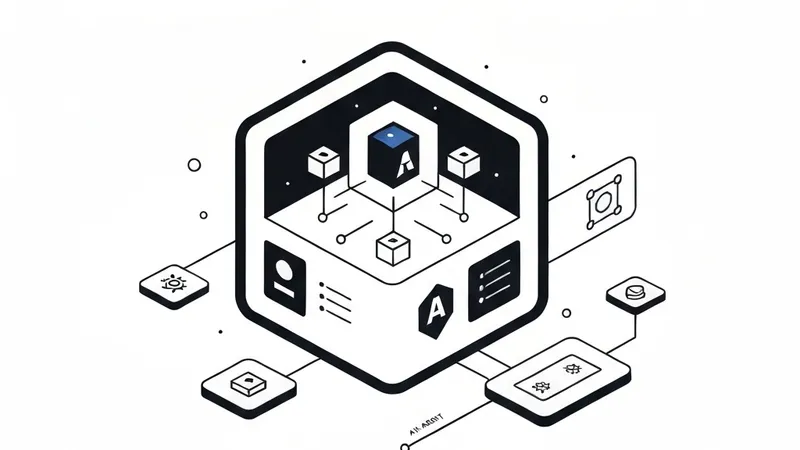
The mechanics of agentic tool calling illustrate how this system functions. When an enterprise AI agent needs to perform an action outside its core neural network, such as querying an inventory system, it generates a command to access an external tool. Microsoft’s framework strategically places a policy enforcement engine between the language model and the broader corporate network. Each time the agent attempts to trigger an external function, the toolkit intercepts the request and verifies the intended action against a centralized set of governance rules. If the action violates policy (e.g., an agent authorized only to read inventory data tries to initiate a purchase order), the toolkit blocks the API call and logs the event for human review.
This provides security teams with a verifiable, auditable trail of every autonomous decision. Developers also benefit, as they can build complex multi-agent systems without needing to hardcode security protocols into every individual model prompt. Security policies are entirely decoupled from the core application logic and managed at the infrastructure level.
Most legacy systems were not designed to interact with non-deterministic software. An old mainframe database or a customized enterprise resource planning (ERP) suite lacks native defenses against a machine learning model sending malformed requests. Microsoft’s toolkit acts as a protective translation layer. Even if an underlying language model is compromised by external inputs, the system’s perimeter remains secure.
Microsoft has opted to release this runtime toolkit under an open-source license.