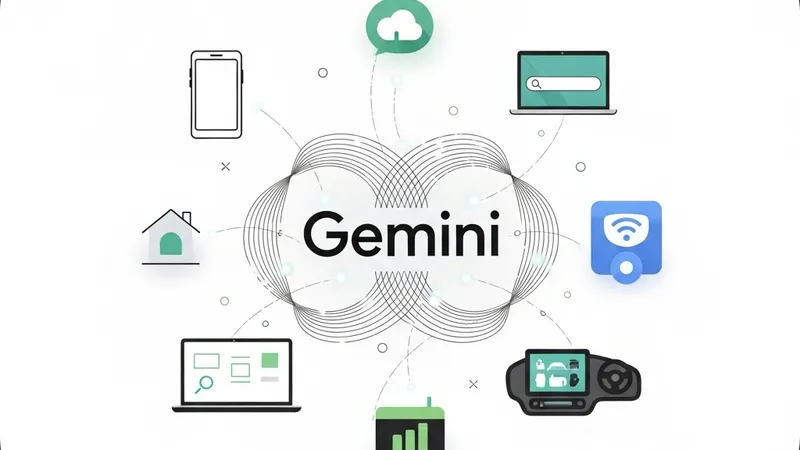
Google I/O 2026 kicks off on Tuesday, May 19, at the Shoreline Amphitheatre in Mountain View. Google’s long-term goal has become undeniable: making Gemini synonymous with AI. We expect the tech giant to inject Gemini, in its various forms and models, into every platform and tool it makes. Integration is the primary theme as Google scales its AI ecosystem.
Looking at the roadmap, Google launched Gemini 2.5 Flash and Pro at I/O 2025, followed by Gemini 3 in November 2025, and previews of Gemini 3.1 Pro and 3.1 Flash-Lite earlier this year. The industry is watching closely to see if Google will announce Gemini 4 or a decimal iteration like Gemini 3.5. Regardless of the versioning, the next-gen Gemini will be embedded throughout Android, ChromeOS, and Android Auto. Critical metrics to watch include parameter efficiency and local inference speed on mobile hardware.
The transformation of Android is particularly ambitious. Recent previews suggest Android 17 is evolving from a traditional operating system into an 'Intelligence System.' This shift introduces 'agentic' capabilities, where Gemini understands context, anticipates user needs, and takes proactive actions. This agent-driven approach is set to fundamentally change how users interact with Android-powered phones and tablets.
However, the hardware barrier for 'Gemini Intelligence' remains high. According to official documentation, the system requires 12GB of RAM and a 'qualified SOC flagship chip,' along with support for AI Core and Gemini Nano v3. This suggests that even recent devices like the Pixel 9 series or the base Samsung Galaxy Z Fold 7 might not meet the criteria. Despite hardware concerns, excitement is building for features like Rambler (AI-enhanced dictation that removes filler words), 3D emojis, Pause Point (a new focus feature), and 'Create My Widget,' which uses Gemini to generate custom home screen elements.
Additionally, we expect more details on Android XR. Following last year's prototype preview, there is significant anticipation for concrete device announcements from Google and its eyewear partners, as the industry bets on smart glasses being the next computing frontier.