Google I/O 2026 kicks off on Tuesday, May 19, at the Shoreline Amphitheatre in Mountain View, California. Google’s relentless push to inject AI into every platform and tool remains front and center, with the ultimate goal of making Gemini synonymous with artificial intelligence across its entire product lineup.
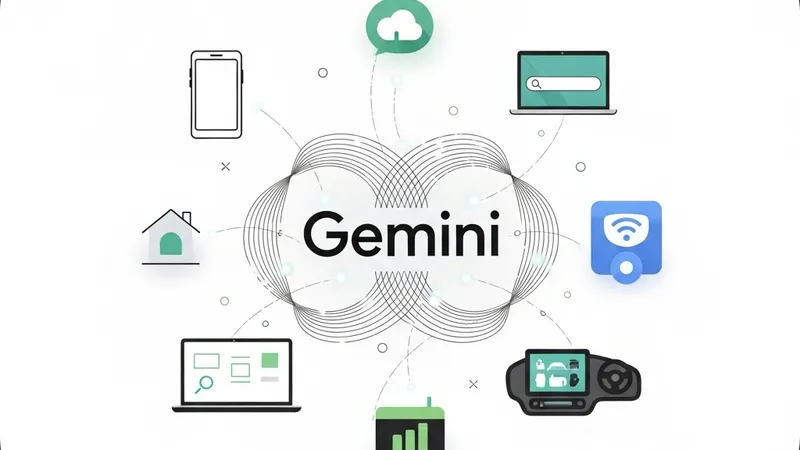
In terms of models, after launching Gemini 2.5 (Flash and Pro) at I/O 2025, Gemini 3 in November, and previews of Gemini 3.1 Pro and Flash-Lite early this year, anticipation is high. Whether Google unveils Gemini 4 or a decimal update like Gemini 3.5, the next-gen LLM will be deeply woven into Android, ChromeOS, Android Auto, and more. Key metrics to watch will be parameter efficiency and on-device execution speeds.
Android's transformation is the most significant highlight. Google recently previewed Android 17's evolution from a traditional operating system into an "Intelligence System." Supported by Gemini, the OS is designed to understand, anticipate, and take actions on your behalf. This infusion of "agentic" capabilities aims to redefine human-device interaction.
However, the hardware requirements for "Gemini Intelligence" are remarkably high. According to Android website footnotes spotted by 9to5Google, it demands at least 12GB of RAM, a "qualified SOC flagship chip," support for five OS updates, and compatibility with AI Core and Gemini Nano v3 or higher. This strict threshold means even recent flagship devices like the Pixel 9 series and base Samsung Galaxy Z Fold 7 might miss out.
For eligible devices, Android 17 brings exciting features including Rambler (an AI dictation tool that strips out filler words), new 3D emojis, Pause Point (a productivity feature to block distracting apps), and Create My Widget (using Gemini to generate custom home screen widgets). Google is also expected to share deeper details and hardware partner announcements for Android XR, its extended reality platform for smart glasses.
[AgentUpdate Depth Analysis] The evolution of Android 17 into an "Intelligence System" marks a critical paradigm shift: AI Agents are moving from sandboxed application layers down into the operating system kernel. By leveraging on-device contextual awareness, native agents can bypass the latency and privacy issues plaguing cloud-only architectures. However, the steep 12GB RAM hardware barrier highlights a pressing compute bottleneck for on-device agentic workflows. As Google sets this new standard, the industry will likely see accelerated NPU development and a shift in developer focus from isolated "AI apps" to system-level micro-agents. Google’s end-to-end control of both the OS and the Gemini model family positions it uniquely to dictate the blueprint for the next generation of ambient computing.