I love emojis. Specifically, my affection is highly targeted: I adore using emojis to react to and modify messages in text chats. This form of communication has become second nature to most of us. When a friend texts that dinner is at 7, you react with a "thumbs up." When someone posts a meme in the group chat, you slap a "haha" on it.
To me, this is a near-perfect form of communication. It is a one-character acknowledgment that signals you have processed the information, while crucially indicating that no further elaboration is needed. Depending on the context, this frictionless interaction saves both time and social energy, eliminating the need for performative follow-ups.
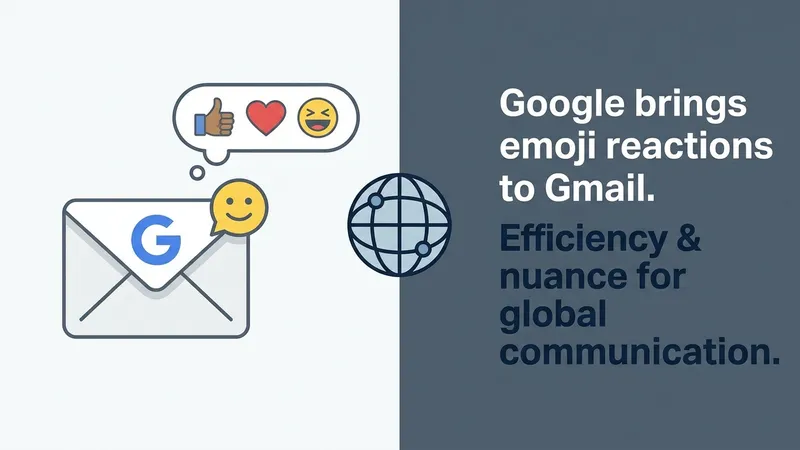
Now, Google is actively pushing this conversational paradigm into our inboxes by promoting emoji reactions in Gmail. This is a highly welcomed shift. For decades, email has carried the weight of formal protocols, where even a simple acknowledgment requires a full sentence or thread. By introducing emoji reactions, Google is bringing the lightweight agility of instant messaging to the traditional email ecosystem, promising to drastically declutter our digital lives.
[AgentUpdate Depth Analysis] Google's push for Gmail emoji reactions may seem like a minor UX update, but it signals a profound shift in Human-Computer Interaction (HCI) within the emerging AI Agent ecosystem. As autonomous agents scale, human users will face unprecedented cognitive overload. If agents rely on verbose emails for every update, communication channels will collapse. Emoji reactions represent a highly compressed, semantic-rich form of "micro-interaction" perfectly suited for efficient Human-in-the-Loop (HITL) feedback. Rather than generating lengthy confirmation text, future AI Agents will leverage these minimalist, low-friction protocols to seek quick validation or signal status. This evolution will fundamentally redefine productivity software, driving the AI agent ecosystem toward lightweight, asynchronous alignment mechanisms that minimize token costs and maximize cognitive efficiency.