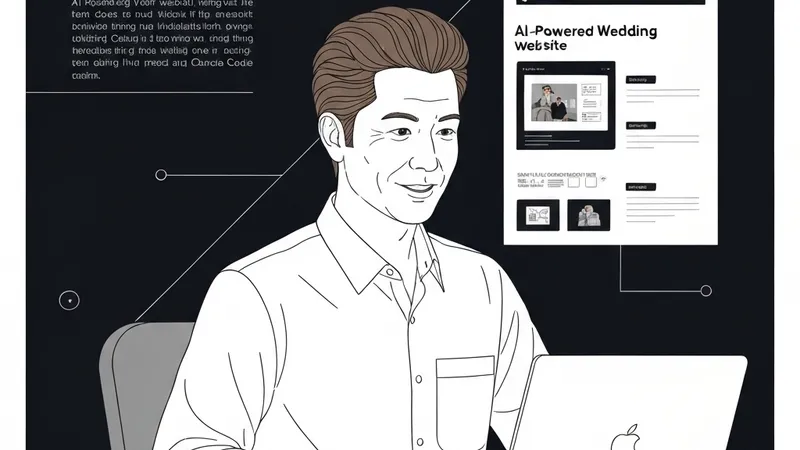
Austin Lau, who works in marketing at Anthropic, may have just set a new standard for AI-powered wedding planning. Ahead of marrying his longtime partner, Lau utilized Claude Code to analyze 12 years of iMessage history between the couple. He then fed this raw data into Claude Design to generate a custom, interactive wedding website packed with relationship statistics, dynamic charts, and inside jokes. He posted the creation on X, where it quickly went viral, racking up more than 3 million views.
The resulting site closely resembled a personalized "Spotify Wrapped" for their relationship. It successfully visualized 161,000 text messages, 8,600 shared photos, almost 28,000 emojis, and nearly 1,800 "I love you" messages. One interactive chart mapped their texting habits over a decade, highlighting a peak in 2016 when they were both in college. Another graph revealed daily behavioral patterns, showing that their messaging frequency typically spiked around 9 p.m.
However, the internet quickly fixated on a hilarious statistical detail rather than the romance: the couple's second most-used emoji over their 12-year history turned out to be the angry face (😡). Commenters on X immediately latched onto this, with one user writing, "Best of luck man," sparking widespread amusement across the platform.
[AgentUpdate Depth Analysis] This viral showcase highlights a massive shift in how consumer-grade AI agents can interact with personal data. By orchestrating Claude Code for backend data analytics and Claude Design for frontend rendering, the user bypassed the traditional software development lifecycle entirely. Unlike older agentic workflows that required heavy orchestration, this seamless workflow demonstrates the power of tightly integrated agent ecosystems in handling highly unstructured private data (like 12 years of chat logs) and converting it into highly personalized interactive experiences. As standards like the Model Context Protocol (MCP) mature, we expect AI agents to move deeper into personal data environments. This will unlock a new paradigm of 'Personal Software'—highly customized, disposable apps generated on-the-fly to serve micro-moments in users' lives, redefining the relationship between humans, data, and software engineering.