AI coding has evolved from IDE-based autocompletion and chat interfaces to full-fledged agents operating directly within your terminal. These advanced tools can edit code, run tests, and iterate until a task is successfully completed. Among the most discussed examples are Anthropic's Claude Code and OpenAI's Codex CLI.
What They Are
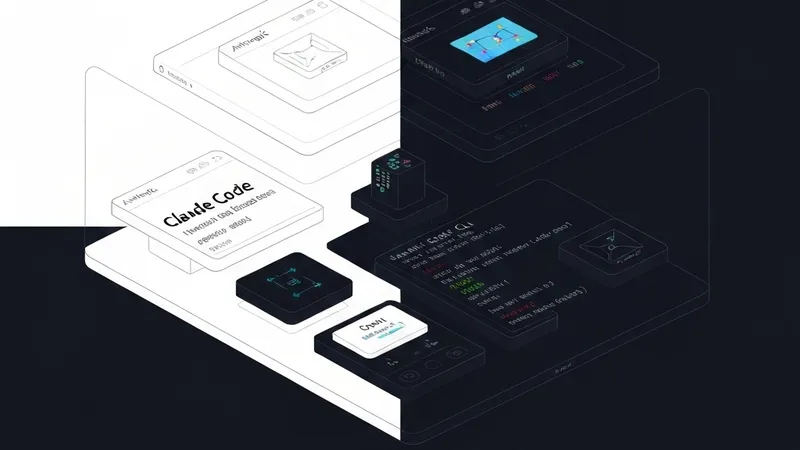
Claude Code is Anthropic's CLI that brings their Claude Sonnet/Opus models directly into your terminal. You run the claude command from within a Git repository, assign a task, and it proceeds to read files, write code, run commands, and iterate. It requires explicit permission prompts before making changes, offering a more controlled, albeit potentially slower, workflow.
Codex CLI is OpenAI's terminal agent, utilizing GPT-4 (and now GPT-4.1 class models). It operates on a similar principle: running within your repository, taking tasks, and implementing changes. OpenAI's design grants it greater autonomy by default, allowing it to chain commands with fewer interruptions.
The Core Experience
Both agents are notably capable for well-scoped tasks such as "add error handling to this function," "write tests for this module," or "refactor this using the strategy pattern." They effectively interpret natural language descriptions, analyze your code, and produce reasonable implementations.
The key differences emerge in more complex scenarios. Claude Code demonstrates superior understanding of context within large codebases. Anthropic has heavily invested in Claude's ability to retain extensive code context and reason about inter-file relationships. When assigned tasks touching multiple modules, it tends to grasp the architectural nuances and implement changes consistent with existing patterns.
Conversely, Codex CLI is generally faster for single-file tasks. It offers snappier responses, quicker iterations, and an assertive approach to task completion. For focused tasks like fixing a specific function or implementing an endpoint, Codex CLI often provides a quicker path.
Agentic Behavior
Codex CLI is more autonomous. It can chain tool calls, execute tests, identify failures, and attempt fixes without requiring explicit user intervention. While this can be highly efficient, it sometimes leads the agent down unproductive paths. Users can adjust its autonomy via safety levels using flags like --approval-mode.
Claude Code adopts a more collaborative stance. It explicitly presents its planned actions and awaits user confirmation before execution. This approach, while potentially slower, ensures users are always aware of the agent's operations. For production code, this review-before-execution model is often preferred.
Model Quality
Comparing model quality is challenging due to frequent updates, as both agents primarily function as wrappers around powerful large language models. The underlying LLM's capability significantly outweighs the agent shell itself. Currently, Claude is noted for its strong reasoning abilities on complex architectural questions.