The anticipated consolidation of the AI coding tool market, with a single dominant player, has not materialized. Instead, the opposite is occurring. In the first week of April 2026, #Cursor rolled out a redesigned interface for orchestrating parallel agents, OpenAI released an official plugin for Anthropic’s #Claude Code, and early adopters began leveraging all three in concert. Rather than competing, these tools are forming layers within an unplanned yet emergent AI #coding stack.
This development mirrors a familiar pattern in infrastructure. Developers rarely rely on a single observability tool; instead, they combine specialized solutions like Prometheus for metrics, Grafana for dashboards, and PagerDuty for alerts. Each tool excels in its specific domain, with cumulative value derived from their composition. AI coding tools are evolving similarly, specializing into distinct layers rather than converging into a monolithic product.
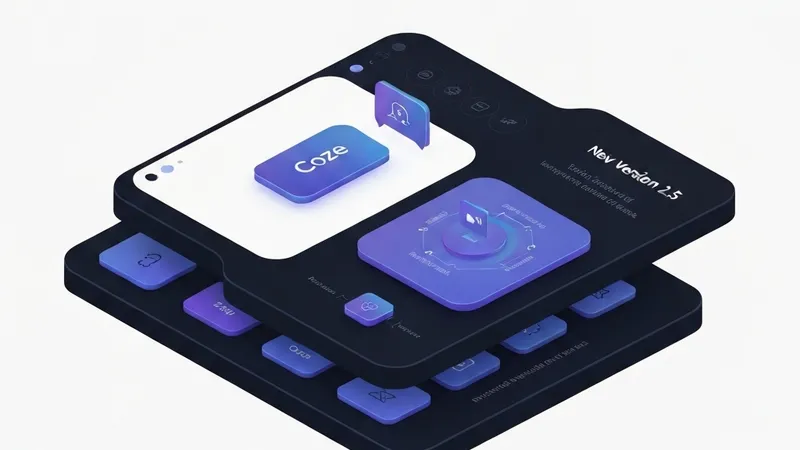
On April 2, Cursor launched version 3, codenamed Glass. This release replaced Cursor’s Composer pane with a dedicated Agents Window, a standalone interface engineered from the ground up for simultaneous management of multiple AI agents. Developers can now orchestrate parallel agents across local machines, worktrees, and cloud sandboxes directly from a single sidebar. Key features in this update, as per Cursor’s changelog, include Agent Tabs for side-by-side conversation viewing, a /best-of-n command for comparing multiple model responses to the same prompt in isolated worktrees, and a Design Mode for UI element annotation within a built-in browser. Sessions can also be seamlessly handed off between local and cloud environments for overnight execution and subsequent local iteration.
Three days prior, OpenAI released codex-plugin-cc on GitHub. This plugin integrates directly into Anthropic’s terminal-based coding agent, Claude Code. It offers six slash commands: /codex:review for standard code reviews; /codex:adversarial-review to pressure-test implementation decisions concerning authentication, data loss, and race conditions; and /codex:rescue, which fully delegates a task to Codex, spinning it up as a subagent capable of bug investigation or re-evaluation of a problem. An optional review gate feature enables Codex to automatically scrutinize Claude’s output before finalization, blocking completion if issues are detected.
This marks a significant move: OpenAI providing an official integration for a direct competitor's product. The Apache 2.0-licensed plugin functions by delegating through the local Codex CLI, utilizing the developer's existing authentication and configuration. This approach avoids a new runtime or a walled-garden ecosystem, simply allowing Codex to be invoked from within Claude Code.
The crucial insight is not merely their simultaneous launch, but rather their inherent composability. Cursor is designed to orchestrate agents leveraging any underlying model. Claude Code accommodates plugins from competing providers. Codex operates as a subagent within another company's terminal environment. These tools are not converging; instead, they are specializing and integrating to form a more flexible and robust AI coding ecosystem.