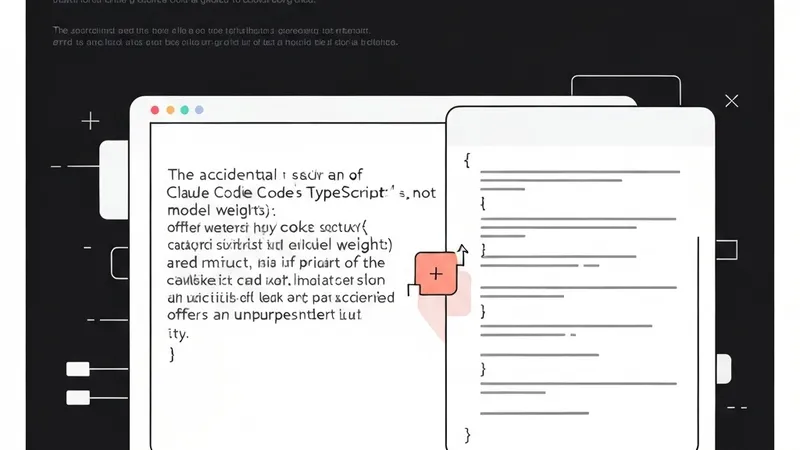
The accidental leak of Claude Code's full TypeScript implementation has exposed production-grade agent patterns, offering developers a unique opportunity to analyze and improve their own AI coding workflows and agent reliability.
It's crucial to clarify that this was not a model weights breach; the Claude model itself remains proprietary. What leaked was the engineering architecture that makes Claude Code function: the patterns, prompts, and safety systems that transform a language model into a reliable coding agent. For developers who use Claude Code daily, this leak provides unprecedented visibility into how Anthropic's team built one of the most sophisticated AI coding agents available. You are not just using the tool; you can now study precisely how it works under the hood.
Key Patterns You Can Learn From
The leaked code reveals several production-grade patterns that are directly applicable to developers building their own agents or customizing Claude Code workflows:
1. Multi-Step Tool Orchestration
The source shows how Claude Code manages complex tool-calling workflows. Instead of simple one-off commands, it implements stateful orchestration where tools can depend on previous outputs, handle partial failures gracefully, and maintain context across multiple operations. This explains why Claude Code feels so reliable when asked to “refactor this entire module”—it's not just making sequential calls but managing a workflow with error recovery built in.
2. Context Window Management
One of the most valuable insights is how Claude Code handles the token limit. The leaked code demonstrates sophisticated context pruning strategies—it doesn't merely truncate but intelligently summarizes or removes less relevant parts of the conversation while preserving critical information. Developers can apply similar strategies in their own CLAUDE.md files by explicitly marking which sections should be prioritized for retention versus which can be summarized.
3. Security and Sandboxing Architecture
The leak reveals how Claude Code isolates file-system access, validates tool inputs to prevent prompt injection, and implements permission hierarchies. This is particularly relevant for developers using Claude Code with sensitive codebases or in production environments. Look for patterns around:
- Input validation before tool execution
- Path sanitization for file operations
- Permission escalation controls for different operations
4. Terminal UI and Developer Experience
The CLI interface patterns are fully exposed. This includes:
- Progress indicators for long-running operations
- Error presentation that is genuinely helpful
- Interactive confirmation flows
- Output formatting that works across different terminal environments
This leak serves as a valuable resource for the AI agent development community, enabling developers to learn from Anthropic's production practices to build more robust and secure AI agents.