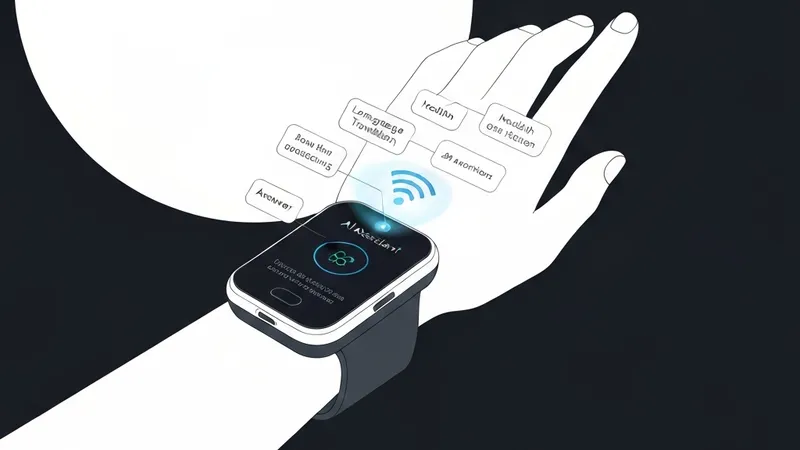
Imagine an AI assistant on your wrist, ready to translate foreign languages, analyze health data, or answer complex questions—all without needing your phone. This isn't a distant sci-fi concept; it's a project achievable for under $15 using off-the-shelf components and Anthropic's state-of-the-art language model, Claude. This article will guide you through the rationale behind integrating Claude into a wearable, detail the necessary hardware, and explain the software pipeline. Whether you're a curious hobbyist or a developer exploring edge AI, you'll gain a clear roadmap to build your own AI-powered wrist device.
Why Claude on Your Wrist?
Most commercial smartwatches restrict users to a vendor's ecosystem, limiting customization, external sensor integration, and transparency into AI operations. In contrast, a DIY Claude wearable offers three significant advantages:
- Full Control Over AI Behavior: You can craft custom system prompts to shape Claude's responses—dictating its tone, limiting reply length, or focusing on specific domains like language translation or fitness coaching. This moves beyond a one-size-fits-all assistant.
- Open Sensor Integration: The ESP32 microcontroller can interface with a wide array of sensors, including heart-rate monitors, environmental sensors, GPS modules, or even specialized probes. This data can be directly fed to Claude for highly contextualized insights.
- Learning by Building: Assembling this wearable provides hands-on experience with APIs, wireless communication, sensor interfacing, and embedded programming—skills that are increasingly vital in the AI-driven world.
The Hardware: Minimalist and Affordable
The core build requires just five inexpensive components:
| Component | Approx. Cost (USD) | Role |
|---|---|---|
| ESP32-S3 Dev Board | $4 | The brain; handles Wi-Fi, Bluetooth, and processing |
| 0.96-inch OLED Screen | $2 | Displays Claude’s responses |
| I2S Microphone | $2 | Captures voice input for hands-free queries |
| Lithium Battery + Charger | $3 | Enables portable, untethered operation |
| Jumper Wires | $1 | Connects all components on a breadboard |
The total cost ranges from $10 to $15, and no soldering is necessary, as everything connects easily on a breadboard using jumper wires.
How the Software Pipeline Works
The system's functionality operates within a straightforward loop:
- Input Capture: A button press (or wake-word detection) initiates audio recording via the I2S microphone.
- Speech-to-Text: The ESP32 streams the recorded audio to a lightweight speech recognition service (or utilizes an offline model like Vosk) to convert speech into text.
- API Call to Claude: The generated text is packaged into an HTTP request and transmitted over Wi-Fi to Anthropic's Claude API. A free API key, typically including generous monthly credits, is required for experimentation.
- Response: Claude processes the request and returns a textual response.
- Text-to-Speech (Optional): The ESP32 can convert Claude's text response into audio, playing it through a speaker.
- Display Output: Claude's response is also simultaneously displayed on the 0.96-inch OLED screen.