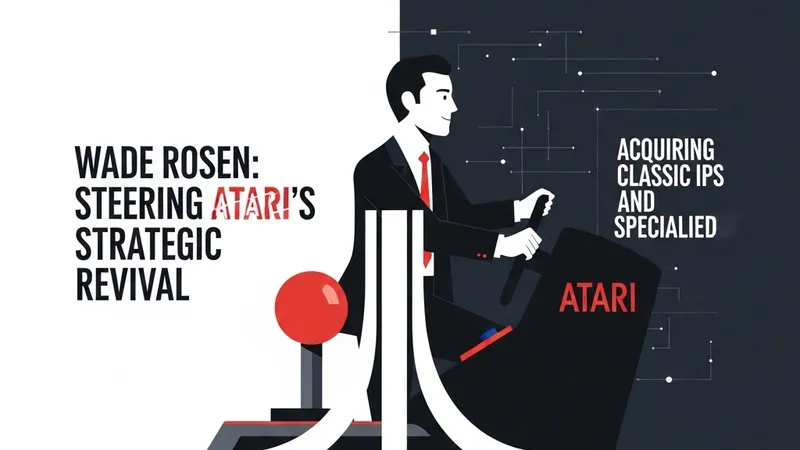
Atari, the pioneering giant of the interactive entertainment industry, is undergoing a remarkable retro revival under the strategic direction of its CEO and majority shareholder, Wade Rosen. Since taking the helm in 2021, Rosen has decisively pivoted the company away from high-risk, cash-burning modern mobile games and free-to-play MMOs. Instead, he has redirected Atari’s focus entirely toward its most valuable legacy asset: retro gaming and its unmatched catalog of classic IPs.
At the heart of Rosen's strategy is game preservation and premium remasters. Atari has aggressively acquired key players in the retro ecosystem, including Nightdive Studios (famed for the System Shock remake), Digital Eclipse (pioneers of interactive gaming documentaries like Atari 50), and MobyGames, the definitive historical video game database. These strategic acquisitions have solidified Atari's position as the dominant player in the vintage gaming and preservation market.
On the hardware front, Atari launched the Atari 2600+, a modernized console capable of playing original legacy cartridges. By catering directly to physical collectors and nostalgic gaming enthusiasts, Rosen has proven that preserving video game history is not just a niche passion project, but a highly profitable business model that can restore a legendary brand to financial health.
[AgentUpdate Depth Analysis] Atari’s strategic consolidation of retro intellectual property holds profound and overlooked implications for the AI Agent ecosystem. Historically, lightweight classic games—especially Atari 2600 titles—have served as the foundational testing grounds for reinforcement learning, from DeepMind's early breakthroughs to modern multimodal agents. By standardizing and owning these clean, legacy source codebases and development frameworks, Atari is inadvertently constructing a highly valuable, copyright-clear sandbox for AI training. In the emerging era of generative gaming, autonomous AI Agents will transition from merely playing these games to dynamically generating retro-styled software and levels on the fly. Atari’s licensed library and structured gaming data could become highly sought-after assets, bridging the gap between nostalgic IP preservation and the future of agentic, real-time procedural entertainment.