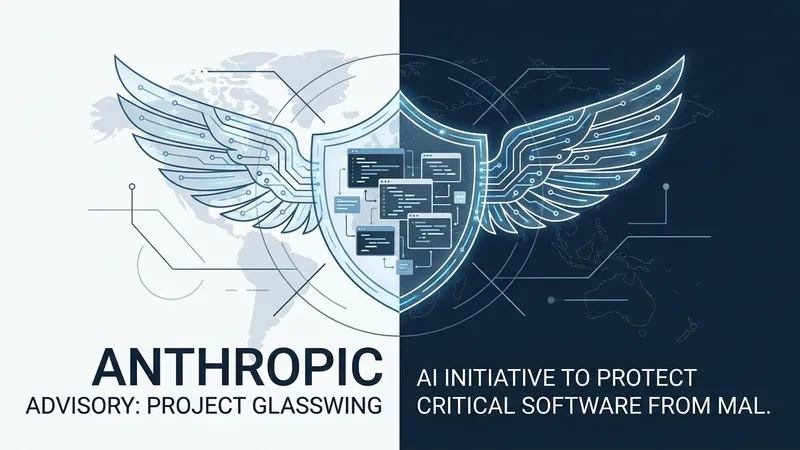
Anthropic has released an advisory update on Project Glasswing, a defensive AI initiative launched last month designed to safeguard critical software infrastructure from being exploited by malicious AI models.
The initiative was fast-tracked shortly after Anthropic developed "Claude Mythos," a highly capable specialized model with an unprecedented ability to discover software vulnerabilities. Fearing that the model could be weaponized if released to the public, Anthropic chose to withhold Claude Mythos from general availability to mitigate dual-use exploitation risks.
Instead of a public rollout, Anthropic limited access to about 50 strategic partners across the technology and cybersecurity sectors. This select group includes industry giants such as AWS, Apple, Google, Microsoft, CrowdStrike, Nvidia, Broadcom, Cisco, and Palo Alto Networks. Anthropic’s early findings from the Mythos deployment have provided valuable insights, highlighting the model's exceptional capability in uncovering deeply hidden security flaws.
[AgentUpdate Depth Analysis] The emergence of Claude Mythos underscores a critical inflection point in the AI Agent ecosystem: the dual-use dilemma of highly autonomous agents. Unlike traditional static analysis tools like Snyk or GitHub Copilot, Mythos-class models possess deep contextual reasoning, enabling them to comprehend complex logic flows and execute multi-step flaw discovery. As AI Agents transition from writing simple scripts to autonomously engineering entire systems, they must be equipped with active, real-time defensive capabilities. Anthropic’s decision to gate Mythos and channel it through "Project Glasswing" with 50 elite partners signals that high-end security agents will likely operate under a federated, heavily guarded model. Moving forward, the agent ecosystem must shift from reactive scanning to proactive, agent-led red-teaming to counter the inevitable rise of automated, malicious agents capable of launching zero-day attacks at scale.