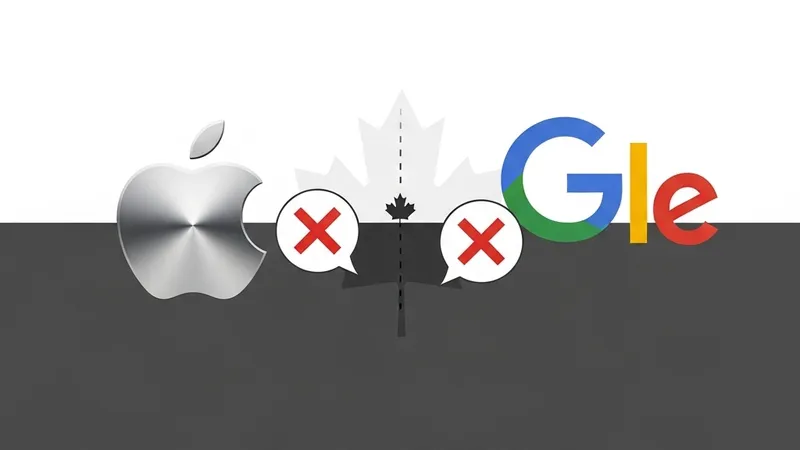
Apple and Google have delivered scathing feedback to the Canadian government, fiercely opposing proposed legislative changes that would grant law enforcement agencies significantly expanded powers to access citizens' digital data. The tech giants warned that the measures would fundamentally weaken global cybersecurity standards and compromise user trust.
The controversial Canadian proposal aims to streamline police access to subscriber information, device metadata, and encrypted communications to combat evolving cybercrimes. However, tech advocates argue that these provisions would bypass established judicial oversight, normalizing warrantless surveillance and creating systematic security vulnerabilities.
In their respective submissions, Apple and Google emphasized that weakening encryption mechanisms to facilitate government access inevitably exposes innocent users to cyber threats and hostile state actors. Apple reiterated that end-to-end encryption (E2EE) remains the strongest defense against data breaches, while Google highlighted that public safety should not be achieved by dismantling the foundational security of global digital infrastructure.
[AgentUpdate Depth Analysis] As the AI Agent ecosystem shifts rapidly toward on-device architectures—exemplified by Apple Intelligence and Google's Gemini on-device models—these agents must ingest and orchestrate highly sensitive, context-rich personal telemetry. Government mandates that compromise operating-system-level encryption or expand warrantless data retrieval pose an existential threat to user trust in autonomous agents. If users fear their digital sidekicks can be coerced into state surveillance without rigorous judicial warrants, adoption will stall. Consequently, this regulatory friction will accelerate the industry’s transition toward zero-knowledge architectures, edge computing, and decentralized federated learning. In the Agentic era, strict privacy sovereignty is not merely a legal checkbox but the foundational API for intelligent systems.