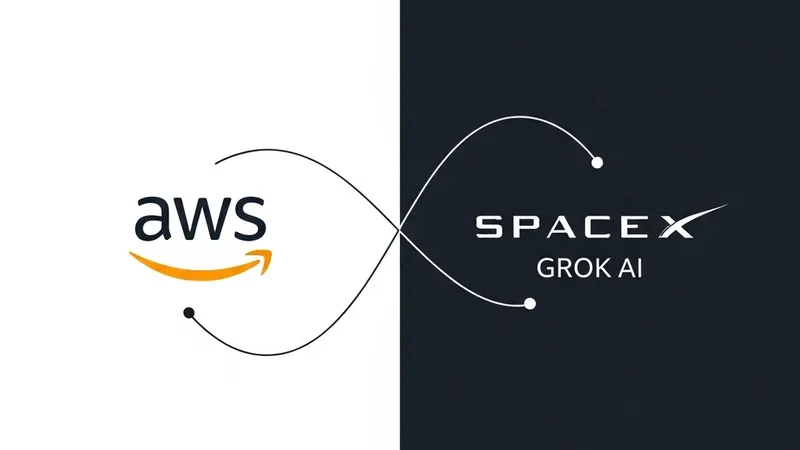
Amazon Web Services is in talks to soon add SpaceX's latest Grok models to its flagship AI platform Bedrock, according to people familiar with the matter. The strategic move would significantly deepen AWS's ongoing push to position Bedrock as the ultimate central hub for the industry's leading AI models.
For Elon Musk's SpaceX, a partnership with Bedrock could massively broaden user adoption and market reach. SpaceX, which is currently preparing for a highly anticipated and massive initial public offering (IPO), would gain direct access to AWS's colossal global base of enterprise cloud customers. AWS serves millions of active customers worldwide, and Bedrock has quickly emerged as one of the cloud giant's most promising and fast-growing AI businesses.
Launched in 2023, Amazon Bedrock allows enterprise customers to build and scale generative AI applications using foundation models from multiple top-tier providers, all while AWS manages the underlying infrastructure. The platform already boasts a robust portfolio of models from prominent creators such as Anthropic, Meta, and Cohere. Earlier this year, AWS expanded this impressive lineup even further by integrating OpenAI models. Adding Grok would represent another major milestone in AWS's multi-model strategy.
[AgentUpdate Depth Analysis] The potential integration of SpaceX's Grok models into AWS Bedrock marks a pivotal shift in the AI Agent ecosystem toward multi-model orchestration and platform-agnostic deployment. Grok, known for its real-time data retrieval capabilities, offers a highly differentiated asset for developers building real-time, context-aware AI Agents. By adding Grok to a roster that already includes Anthropic and OpenAI, AWS is reinforcing its "Switzerland of AI" approach. This multi-model availability on a single enterprise-grade platform allows Agent developers to implement advanced Model Routing—dynamically shifting tasks between different LLMs based on cost, latency, and specific capability. Ultimately, this integration accelerates the transition from single-model applications to sophisticated, hybrid-model Agent swarms, driving the enterprise AI agent market toward unprecedented levels of flexibility and runtime optimization.