Enterprises are facing growing pressure to justify massive AI investments amid rising operational costs and infrastructure demands.
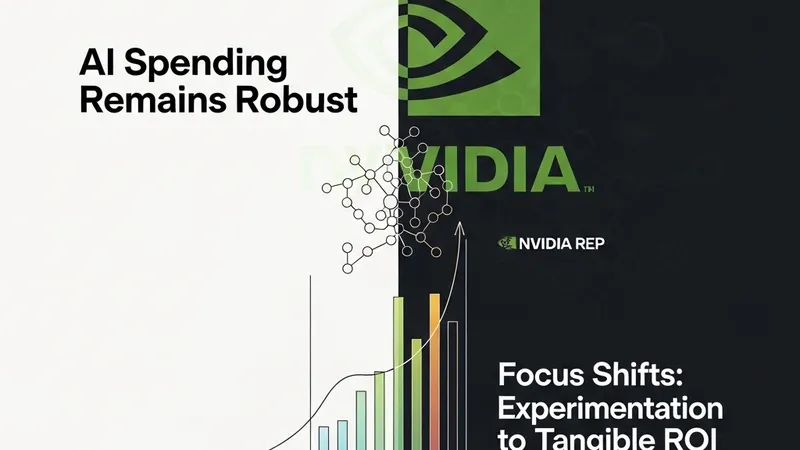
AI spending remains strong, but the industry conversation is shifting from capability and experimentation toward ROI, operational complexity and accountability.
Now, the industry faces a tougher question: Can enterprises operationalize AI efficiently enough to justify the massive investments in infrastructure and talent?
On its quarterly earnings call, Nvidia reported first-quarter revenue of $81.6 billion, an 85% jump from last year. The company attributed this growth to rising demand from hyperscalers and enterprises, network expansion, optics partnerships and broader spending beyond GPUs. Nvidia CFO Colette Kress highlighted that the rapid expansion of AI infrastructure is fueled by the growth of AI models and applications.
[AgentUpdate Depth Analysis] The shifting focus toward AI ROI marks a critical inflection point where generative AI must transition from co-pilot sidekicks to fully autonomous AI Agents. Traditional prompt-based LLM deployments often suffer from high operational costs and low integration depth, failing to deliver quantifiable financial returns. In contrast, Agentic AI, characterized by multi-step reasoning, tool usage, and standard protocols like MCP (Model Context Protocol), directly targets complex corporate workflows. This paradigm shift will redefine enterprise metrics from cost-per-token to cost-per-completed-task, providing the precise business justification CFOs are demanding. Moving forward, the growth of the AI Agent ecosystem will be the primary vehicle for unlocking real enterprise productivity and justifying the massive infrastructure buildout led by hardware giants like Nvidia.