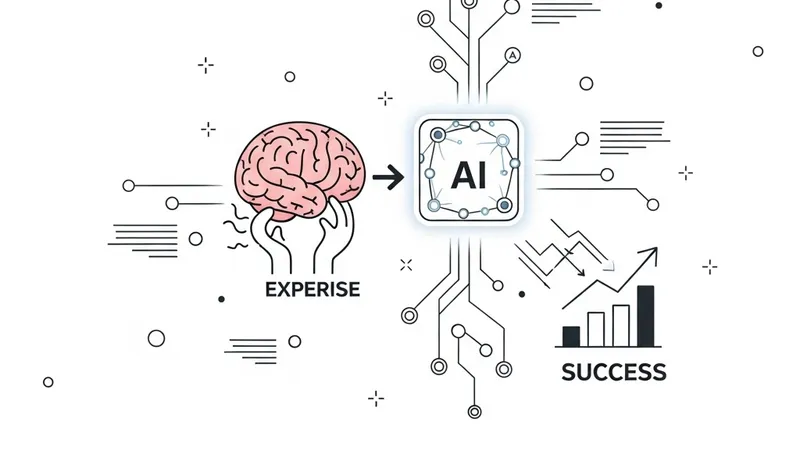
For decades, strategic foresight—the ability to predict the success of high-stakes, uncertain business ventures—has been held as a uniquely human superpower. However, new research suggests that artificial intelligence is now beginning to surpass human prediction capabilities in this critical domain.
The study, co-authored by Felipe Csaszar, a professor of strategy at the University of Michigan's Ross School of Business, along with Aticus Peterson of New York University and Daniel Wilde of Indiana University, conducted a prospective prediction tournament. This tournament utilized 30 live crowdfunding technology projects, which were launched after the AI models' training cutoffs, ensuring the models could not use past data in their evaluations.
In this research, various large language models (LLMs) completed 870 pairwise comparisons, producing rankings of predicted fundraising success. These AI forecasts were then benchmarked against the predictions of 346 managers and three investors, all of whom were trained in MBA programs.
The findings revealed that top-tier LLMs were significantly more accurate than the human experts. The top-performing model, Gemini 2.5 Pro, achieved a correlation of 0.74, correctly identifying the winner in nearly 4 out of 5 cases. In contrast, the best human results correctly identified a winner in only 3 out of 5 comparisons. Professor Csaszar noted that this represents a significant shift in the frontier of AI possibilities within the field of strategy.
The implications suggest that businesses may no longer compete on once rare, specialized strategic forecasting skills, but rather on how they integrate AI-generated predictions. The research also identified a phenomenon dubbed the "augmentation trap."